

Table of Contents
You may hear perfectly well over breakfast, manage a morning meeting without much difficulty and follow a conversation at lunchtime. Then evening arrives and something seems to change. People appear to speak less clearly. Television dialogue becomes harder to follow. A busy restaurant feels like work rather than relaxation.
Your hearing has probably not deteriorated between morning and dinner.
What may have changed is the amount of effort you have already spent listening.
Listening is not a passive process. In straightforward conditions, much of it feels automatic. But when speech is faint, incomplete or competing with other sounds, following a conversation requires more concentration. Over several hours, that additional effort can contribute to what researchers describe as listening-related fatigue.
This can happen to people with hearing loss, but the relationship is not simple. Difficult acoustics, long meetings, several speakers, unfamiliar accents and sustained concentration can make listening demanding even when a conventional hearing test is relatively good.
The useful question, therefore, is not simply, “Am I tired?” It is whether certain listening situations repeatedly leave you unusually drained, and whether hearing has become part of the reason.
Hearing a voice and understanding it are not the same task
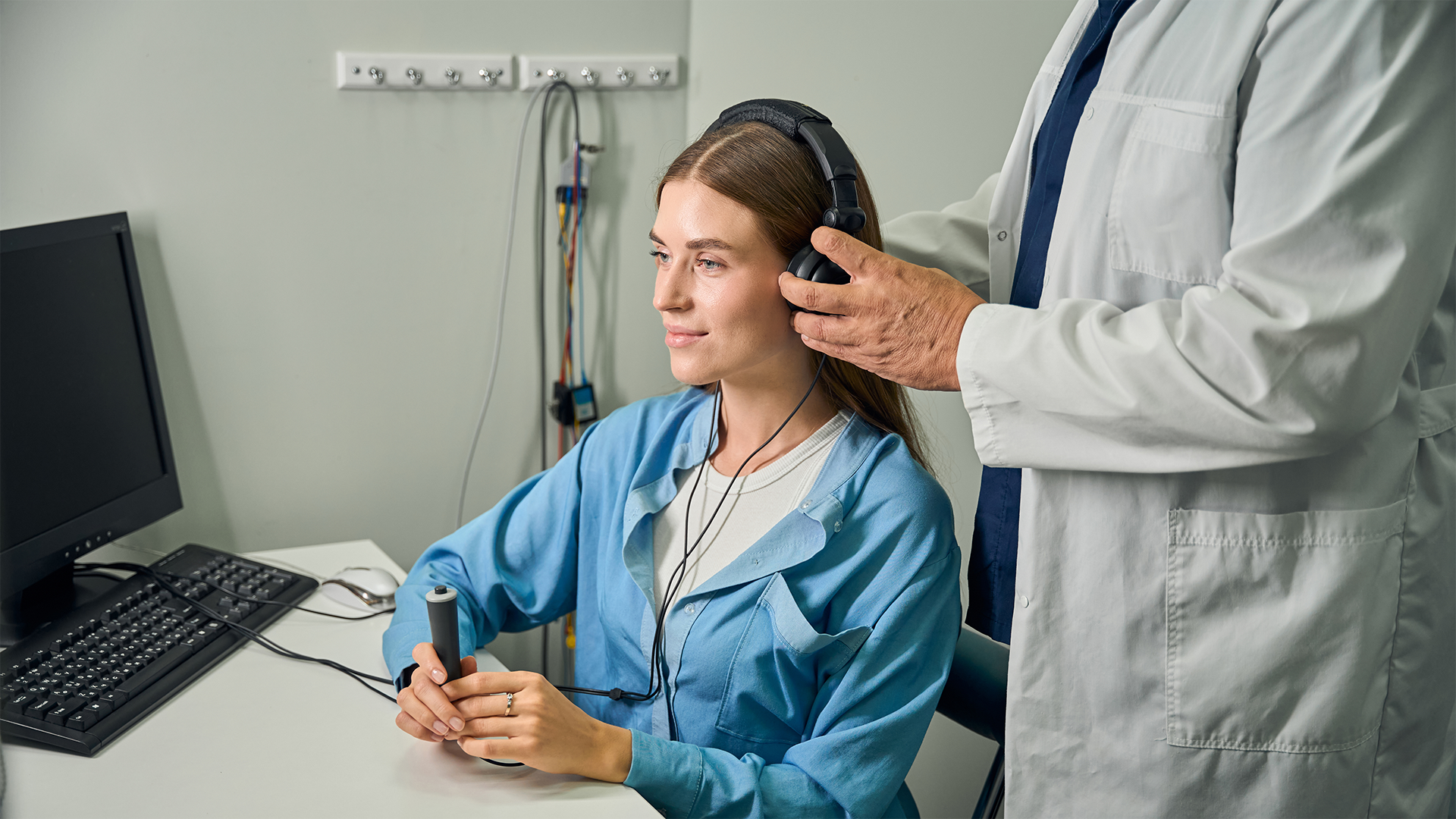
A pure-tone hearing test measures the quietest sounds you can detect across a range of frequencies. It is fundamental to hearing assessment, but everyday communication asks much more of the auditory system.
Imagine talking to a friend in a quiet room. Their voice reaches you clearly and there is little competing sound. Now put the same conversation in a café with music, coffee machines, chairs moving and several tables talking at once.
The words have not changed. The listening task has.
To follow the conversation, you must separate your friend’s voice from everything around it, fill in pieces of speech that have been masked by noise and keep track of meaning while the conversation continues. Facial expressions, lip movements and context may quietly help.
When hearing sensitivity is reduced, some of the acoustic information reaching the listener may be less complete. Speech can remain audible without being effortlessly clear. The listener may therefore rely more heavily on concentration, context and visual information to work out what was said.
This helps explain a familiar complaint: “I can hear people talking. I just can’t always understand them.”
Research into listening effort has shown that speech which is acoustically degraded can require greater mental effort to understand. Importantly, audiometric thresholds alone do not tell us how demanding a particular conversation will feel.
That is one reason someone can perform reasonably well in a quiet test environment yet struggle at a family dinner, business meeting or busy restaurant.
Why the evening can expose difficulties that were easier to manage earlier
Listening-related fatigue should not be interpreted as the ears physically “running out of power”. The mechanism is more subtle.
Throughout a normal day, people move between different auditory demands. A morning might include television or radio, traffic, conversations, telephone calls and meetings. Later come shops, restaurants, family discussions or social events.
Some of these situations require very little effort. Others demand sustained attention.
Studies examining hearing difficulties in daily life have found links between challenging listening situations, listening effort and fatigue. Research using repeated assessments throughout the day has also shown that fatigue is dynamic rather than fixed.
This does not mean that everyone with hearing loss will experience a predictable decline at a certain hour. Sleep quality, general health, workload, stress, medication and many other factors influence fatigue.
But there is a useful pattern to recognise.
If conversation repeatedly seems harder after a long day of meetings, if social events leave you disproportionately exhausted, or if you begin withdrawing from discussion in the evening because following speech feels like too much work, listening effort may be contributing.
The environment matters too.
A quiet dinner with one person is very different from six people talking around a table. Distance from the speaker matters. Reverberant rooms make speech less distinct. Background music competes with voices. People speaking simultaneously remove many of the pauses the listener might otherwise use to catch up.
By evening, a difficult acoustic environment may simply demand more effort than you have available or are willing to spend.
Small compensations can hide a hearing problem surprisingly well
One reason listening fatigue is easy to overlook is that people become skilled at compensating.
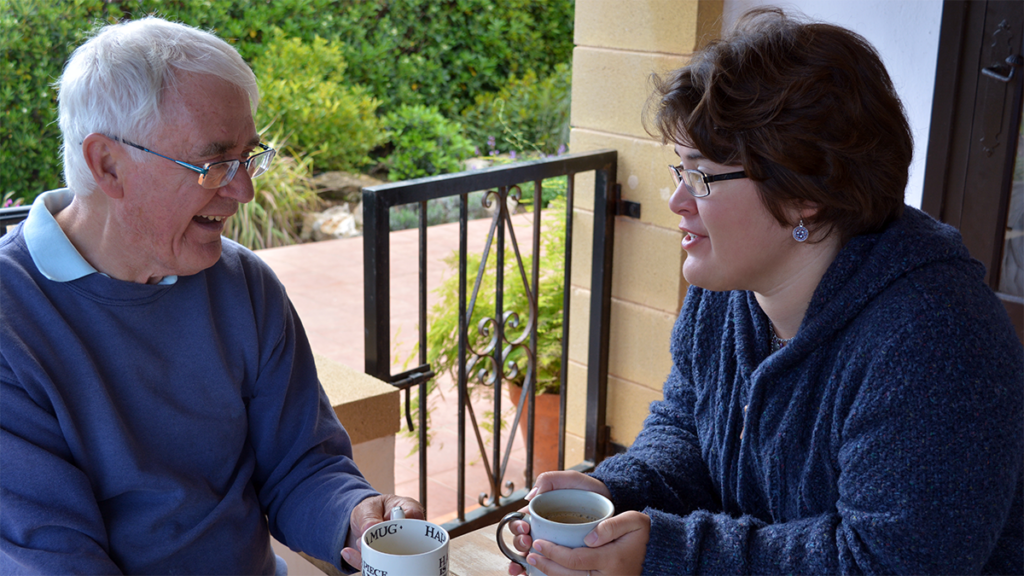
You may automatically choose the seat that gives you the clearest view of everyone’s face. You may turn one ear towards the person speaking. You might watch lips without consciously realising it, ask a partner what somebody said or reconstruct a missing word from the sentence around it.
These strategies can work remarkably well.
They can also make gradual hearing changes less obvious.
Instead of thinking, “I am not hearing this clearly,” a person may conclude that everyone mumbles, restaurants have become unbearably noisy or television actors no longer speak properly.
Again, any of those observations may contain some truth. Modern restaurants can be acoustically difficult. Film and television dialogue can genuinely be challenging. Not every difficult conversation indicates hearing loss.
The pattern is what matters.
Notice whether you need more repetition than other people. Consider whether one-to-one conversation remains easy while groups have become progressively harder. Pay attention to whether telephone calls require intense concentration, or whether you feel relief when a meeting ends simply because you no longer have to listen so carefully.
Another clue is inconsistency across environments.
Some people are surprised when a standard hearing test identifies only a mild loss because their real complaint is much greater in noise. Others may have thresholds that fall within conventional limits yet still report significant difficulty following speech when several sounds compete.
Neither situation should be dismissed.
A hearing assessment should help explain the person’s experience, not merely produce an audiogram.
Why testing speech in noise can reveal more of the real problem
Pure-tone and speech audiometry provide essential information about hearing sensitivity and speech recognition. When the main complaint involves restaurants, meetings, groups or other noisy settings, however, additional assessment can be particularly informative.
Speech-in-noise testing measures how well a person can understand speech when competing sound is present. It therefore recreates an important part of the difficulty that many people describe outside the clinic.
At AudioCare, Speech-in-Noise testing and Audible Contrast Threshold testing can be used alongside conventional audiometry when clinically appropriate.
The ACT test does not ask the listener to understand words. Instead, it measures sensitivity to spectro-temporal modulation, changes in the sound pattern that are relevant to separating speech from background noise. The result can provide additional information about how a person is likely to perform in complex listening environments and can also assist with hearing-aid optimisation when amplification is required.
No single test measures “listening fatigue” in everyday life.
That is important. Fatigue is influenced by the person, the environment, the task and the length of time spent listening. A clinical assessment therefore needs both measurements and a detailed history.
An audiologist may ask when the difficulty occurs, whether quiet conversation is easy, which environments are most demanding, whether one ear seems better than the other and whether symptoms such as tinnitus, pressure, dizziness or sudden hearing changes are also present.
The goal is to determine why listening has become difficult rather than assume that tiredness automatically means hearing loss.
Making listening less demanding starts with finding the cause
There are practical ways to reduce unnecessary listening effort.
In conversation, reducing competing noise can make a substantial difference. Moving closer to the speaker improves the speech signal reaching the ears. Facing the person provides useful visual information. In restaurants, choosing a quieter table away from loudspeakers, kitchens and busy service areas can make communication easier.
Short breaks can also be sensible during long periods of concentrated listening. After several meetings or a lengthy social event, a few minutes in a quieter environment may simply give you a break from continuous auditory demands.
If hearing aids are already being used, persistent fatigue or difficulty in noise should not automatically be accepted as unavoidable. The fitting, physical comfort, programming and real-world performance of the devices may need reviewing. Appropriate verification and individual adjustment matter because hearing aids are only useful when they are configured for the person wearing them.
For people who have not had their hearing assessed, repeated listening difficulty deserves investigation, particularly when family or friends have noticed changes too.
A comprehensive assessment can establish hearing thresholds, examine speech recognition and, where appropriate, investigate performance in background noise. The results may reveal hearing loss, identify a specific area of difficulty or show that hearing is unlikely to be the main explanation for the fatigue.
Persistent general tiredness should not automatically be attributed to hearing. Fatigue has many possible causes, and unexplained or significant symptoms may require medical assessment.
But when tiredness appears closely tied to conversations, meetings, group situations or noisy environments, there is value in asking a more precise question.
Not “Why am I exhausted by the evening?”
But “How much work am I doing simply to follow what people are saying?”
Sometimes the answer begins with a hearing test. Sometimes it requires looking beyond the standard audiogram. Either way, understanding the listening demand is more useful than simply learning to live with it.
References
- https://pubmed.ncbi.nlm.nih.gov/24673660/
- https://pubmed.ncbi.nlm.nih.gov/27541332/
- https://pubmed.ncbi.nlm.nih.gov/33136628/
- https://pubmed.ncbi.nlm.nih.gov/28938250/
- https://pubmed.ncbi.nlm.nih.gov/23426091/
- https://audiocare.pt/pure-tone-speech-audiometry/
- https://audiocare.pt/speech-in-noise-act-test/
- https://audiocare.pt/why-probe-microphone-measurements-improve-hearing-aid-fit/