
Table of Contents
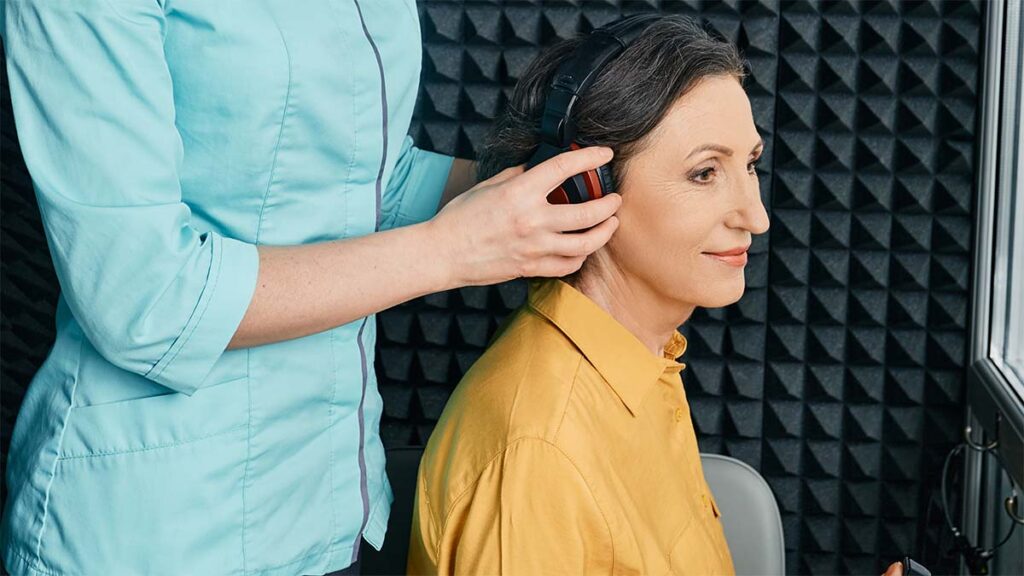
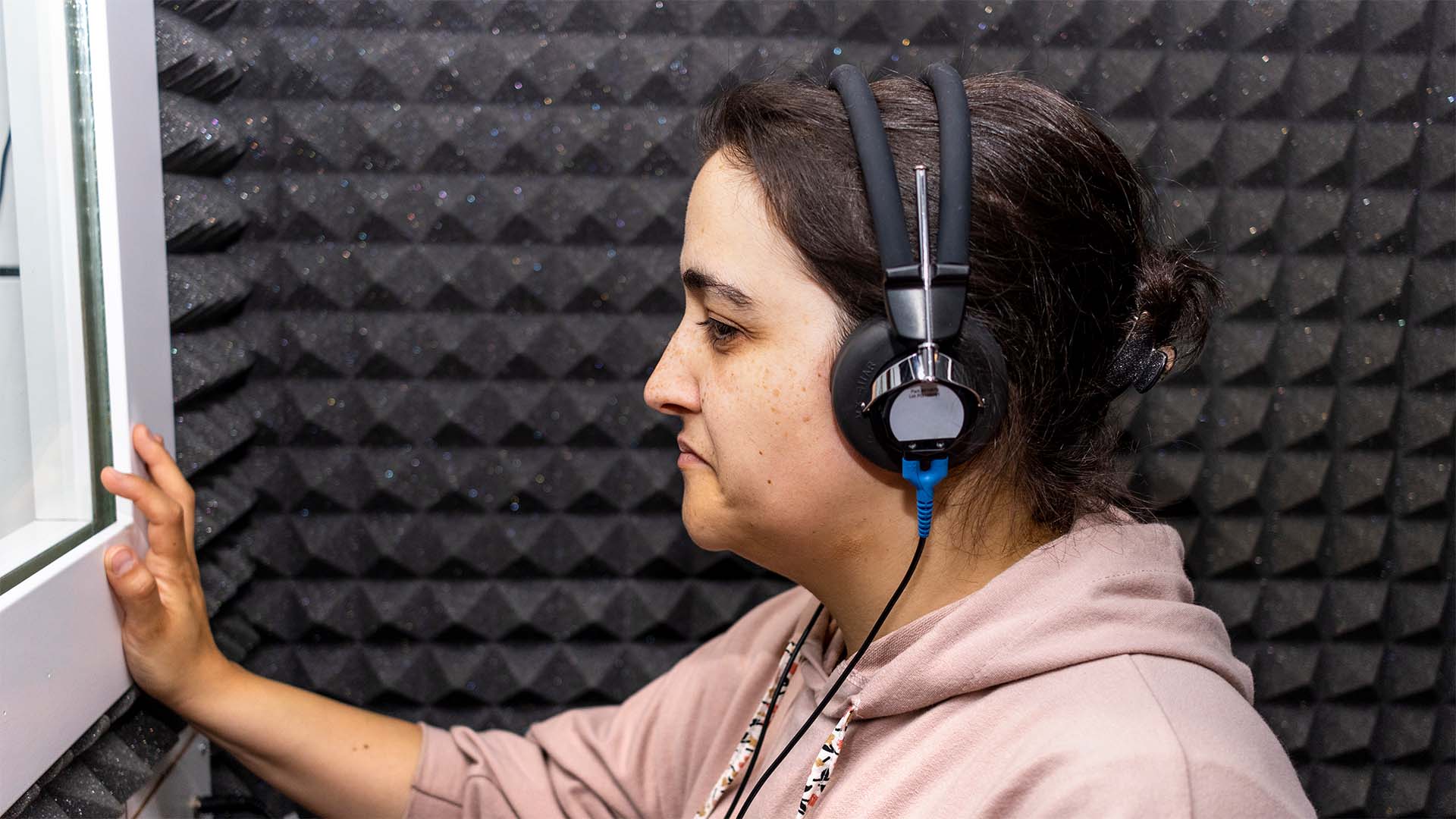
Anyone who has had a formal hearing test will probably remember the room.
It is usually small, deliberately quiet and noticeably different from the rest of the clinic. Once the door closes, ordinary sounds seem to disappear. For some people, that raises an obvious question: if hearing difficulties happen in restaurants, living rooms, cars and conversations, why test hearing somewhere so unnaturally quiet?
Because the first job of pure-tone audiometry is not to reproduce everyday life.
It is to measure something much more specific: the quietest sounds each ear can detect at different frequencies.
To do that accurately, the test environment has to interfere as little as possible.
A sound-treated room does not make an audiogram automatically correct, and it certainly does not tell us everything about how someone communicates outside the clinic. But without sufficient control of background noise, even a well-calibrated audiometer can produce results that are harder to trust.
The test is deliberately looking for very quiet sounds
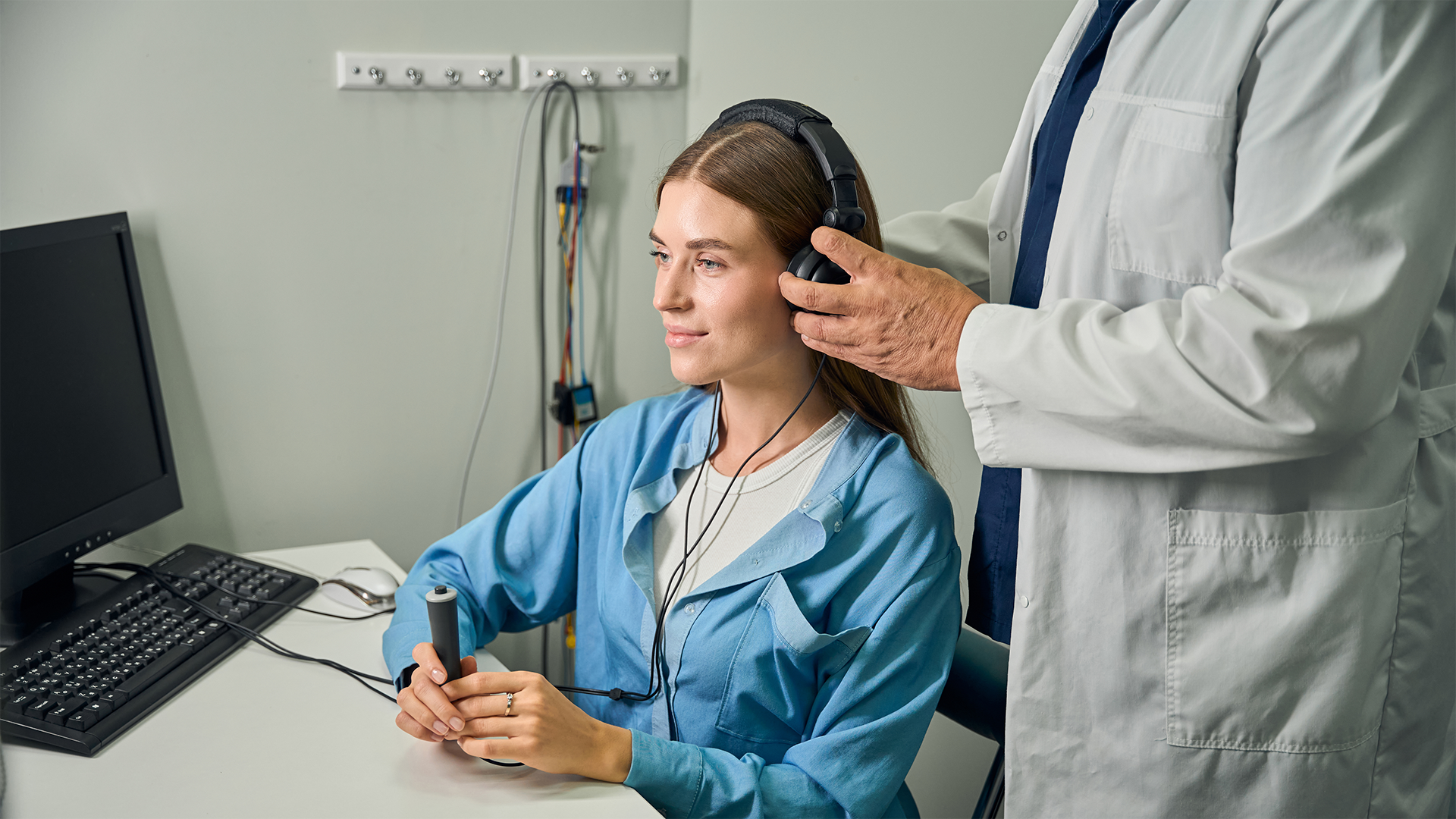
During pure-tone audiometry, the audiologist presents tones at different pitches and gradually changes their level to establish the hearing threshold.
The threshold is not the softest sound a person happens to detect once. It is the lowest level at which responses become sufficiently consistent according to the testing procedure.
Some of those tones are extremely quiet.
That creates an obvious problem. If the room contains ventilation noise, traffic, voices from the corridor, equipment hum or low-frequency vibration from the building, the patient is no longer listening only for the test signal.
The environment has become part of the test.
Imagine trying to hear a quiet ticking watch while an air-conditioning unit is running nearby. The ticking has not changed, but the background sound makes it harder to detect.
Audiometry faces the same basic problem, except that the aim is to measure thresholds precisely across a range of frequencies.
Professional standards therefore specify maximum permissible ambient noise levels for audiometric test environments. These limits are not based on whether a room merely feels quiet to the clinician. They take into account the frequencies being tested, the type of transducer being used and the lowest hearing levels the room needs to measure reliably.
A room that is quiet enough for ordinary conversation is not necessarily quiet enough for threshold audiometry.
Background noise can make hearing appear poorer than it really is
The most important effect of excessive background noise is masking.
Masking occurs when one sound makes another sound more difficult to hear. In a hearing test, environmental noise can partially cover the test tone, particularly when that tone is already being presented close to the person’s true threshold.
The patient may then fail to respond, not because their hearing is poorer, but because the test tone has effectively disappeared into the background sound.
The audiologist increases the tone until it becomes audible.
If that happens repeatedly, the recorded threshold can appear higher than the true threshold.
In practical terms, environmental noise can create the impression of a hearing loss or make an existing loss appear greater than it is.
This becomes particularly important when hearing is normal or only mildly reduced. Someone with a significant hearing loss will not hear the very soft test tones in any case. But when the difference between normal hearing and a mild reduction may be only a relatively small number of decibels, background noise can interfere with exactly the part of the measurement we are trying to establish.
The effect is also frequency-dependent. Many everyday environmental sounds contain substantial low-frequency energy, from ventilation systems and road traffic to building services. This is one reason controlling the acoustic environment is particularly important when measuring low-frequency thresholds.
It is also why an audiologist should be alert to intermittent noise. A door closing outside the room or a vehicle passing during one tone presentation can matter even if the room is quiet most of the time.
The type of hearing test changes how much noise matters
Not every audiometric measurement is affected by ambient noise in exactly the same way.
During air-conduction testing, tones are usually presented through insert earphones or headphones. These provide some physical attenuation of sound coming from the room.
Insert earphones generally provide greater attenuation of environmental noise than traditional supra-aural headphones. That does not mean ambient noise can simply be ignored, but it does change how much outside sound reaches the ear.
Bone-conduction testing is different.
The bone vibrator is placed against the skull, usually behind the ear, and the ear canal remains open. There is no earphone providing the same physical barrier against environmental sound.
For this reason, the British Society of Audiology specifically notes that ambient noise is a greater concern during bone-conduction measurement.
That distinction matters because air and bone conduction are often compared to help classify the pattern of hearing loss. If the test environment compromises one part of that comparison, interpretation becomes less secure.
Speech testing also requires appropriate acoustic control, although the problem is slightly different. Speech is not a steady signal. Individual elements of speech vary considerably in intensity, so quieter parts of words can potentially be affected by background noise even when the average presentation level appears sufficient.
The lesson is simple: “quiet enough” is not one universal number. The suitability of the room depends on what is being measured.
A sound-treated room is not the same as a perfectly silent room
The term sound-treated is useful because it avoids a common misconception.
Audiometric rooms are designed to reduce the effect of external and internal noise, but they are not required to exist in absolute silence. Absolute silence is neither realistic nor necessary.
What matters is whether ambient noise remains below appropriate limits for the measurements being performed.
The room is only one part of the quality-control process.
The audiometer itself must be correctly calibrated. Earphones and bone vibrators need to meet relevant standards. The clinician needs to place the transducers correctly, give clear instructions and use an appropriate threshold-seeking procedure.
The patient also needs to understand the task.
If someone waits until they are completely certain before responding, thresholds may appear slightly poorer. If they respond to imagined tones, the opposite problem can occur. This is why audiologists look for patterns and consistency rather than treating every individual button press as an unquestionable result.
The controlled room removes one important source of uncertainty. It does not remove all uncertainty.
Nor is it designed to reproduce everyday listening.
Someone can have hearing thresholds within a relatively good range and still report substantial difficulty understanding speech in noise. Conversely, the audiogram may clearly show hearing loss without telling us exactly how that person manages at a dinner table, in a meeting or when several people speak at once.
Those are different clinical questions and may require speech audiometry, Speech-in-Noise testing or other assessment alongside the pure-tone audiogram.
The room helps us trust what the audiogram is actually showing
There is nothing particularly dramatic about a sound-treated room. That is rather the point.
Its purpose is to make the test less interesting acoustically, so that the audiologist can measure the patient rather than the building.
At AudioCare, pure-tone audiometry forms part of a broader assessment rather than standing alone. The audiogram provides objective information about hearing sensitivity across frequencies and between ears, but its value depends on how well that information has been obtained and how carefully it is interpreted.
A controlled test environment helps ensure that a quiet tone was missed because the person could not hear it, not because an air-conditioning system, passing vehicle or nearby conversation covered it.
That distinction may sound minor.
When the purpose of the test is to find the quietest sound a person can detect, it is fundamental.
A sound-treated room does not recreate real life.
It gives us a reliable reference point from which real-life hearing can be understood.
References
- https://www.thebsa.org.uk/wp-content/uploads/2025/07/Practice-Guidance-Acoustic-Considerations-update-July-2025.pdf
- https://www.thebsa.org.uk/wp-content/uploads/2024/01/Recommended-Procedure-Pure-Tone-Audiometry-2018.pdf
- https://www.asha.org/policy/GL2005-00014/
- https://www.asha.org/practice-portal/professional-issues/adult-hearing-screening/
- https://audiocare.pt/pure-tone-speech-audiometry/