

Table of Contents
When parents hear the words “mild hearing loss”, there is an understandable temptation to focus on the word mild.
It sounds reassuring. And in audiological terms, it does describe a relatively small reduction in hearing sensitivity. But it does not tell us how much that reduction matters to a particular child.
A child with mild hearing loss may hear perfectly well in many everyday situations. They may respond when called, follow conversations at home and speak at a normal volume. Difficulties can become more apparent when speech is quiet, when someone is several metres away, when several people are talking at once or when the classroom becomes noisy.
This is why the diagnosis is a starting point rather than a conclusion.
The next questions are more useful: Is the hearing loss temporary or permanent? Is it affecting one ear or both? Is it conductive, sensorineural or mixed? Is it stable? And, most importantly, what effect is it having on this child’s access to speech and communication?
First, what does “mild” actually mean?
Hearing loss is measured in decibels hearing level, or dB HL. Different classification systems use slightly different boundaries, which is worth knowing before attaching too much importance to a single label.
The World Health Organization currently classifies mild hearing loss as an average hearing level from 20 to less than 35 dB HL in the better-hearing ear. Other commonly used audiological classifications have traditionally placed mild loss around 26 to 40 dB HL.
For an individual child, however, an average can hide important information.
A hearing loss may affect mainly certain frequencies. One ear may hear differently from the other. The child may have excellent access to some parts of speech but reduced access to softer consonants or speech spoken at a distance.
Two children whose reports both contain the words “mild hearing loss” can therefore have quite different listening experiences.
There is another important distinction. The word mild describes the degree of hearing loss measured during testing. It does not grade the potential impact on communication, language or school life.
Research in children with mild hearing loss has produced varied results. Some children develop speech, language and literacy skills comparable with hearing peers. Other studies have identified differences in areas including speech perception in noise, language, phonological development and listening performance.
That variability is precisely why the diagnosis needs to be interpreted individually.
The next step is to understand what is causing the hearing loss
“Mild hearing loss” describes a result. It does not tell us the cause.
In children, mild hearing loss can be conductive, sensorineural or mixed.
A conductive loss occurs when sound is not being transmitted normally through the outer or middle ear. One common childhood example is otitis media with effusion, often called glue ear, where fluid accumulates behind the eardrum. Hearing can fluctuate as the middle-ear condition changes.
Sensorineural hearing loss involves the cochlea or auditory pathway and is usually permanent, although its degree may remain stable or change over time.
A mixed hearing loss contains both conductive and sensorineural components.
This distinction changes what happens next.
A child with temporary middle-ear hearing loss may need monitoring, medical or ENT management and repeated hearing assessment. A child with confirmed permanent sensorineural hearing loss requires a different discussion about ongoing audiological monitoring, communication needs and whether hearing technology or other support could be useful.
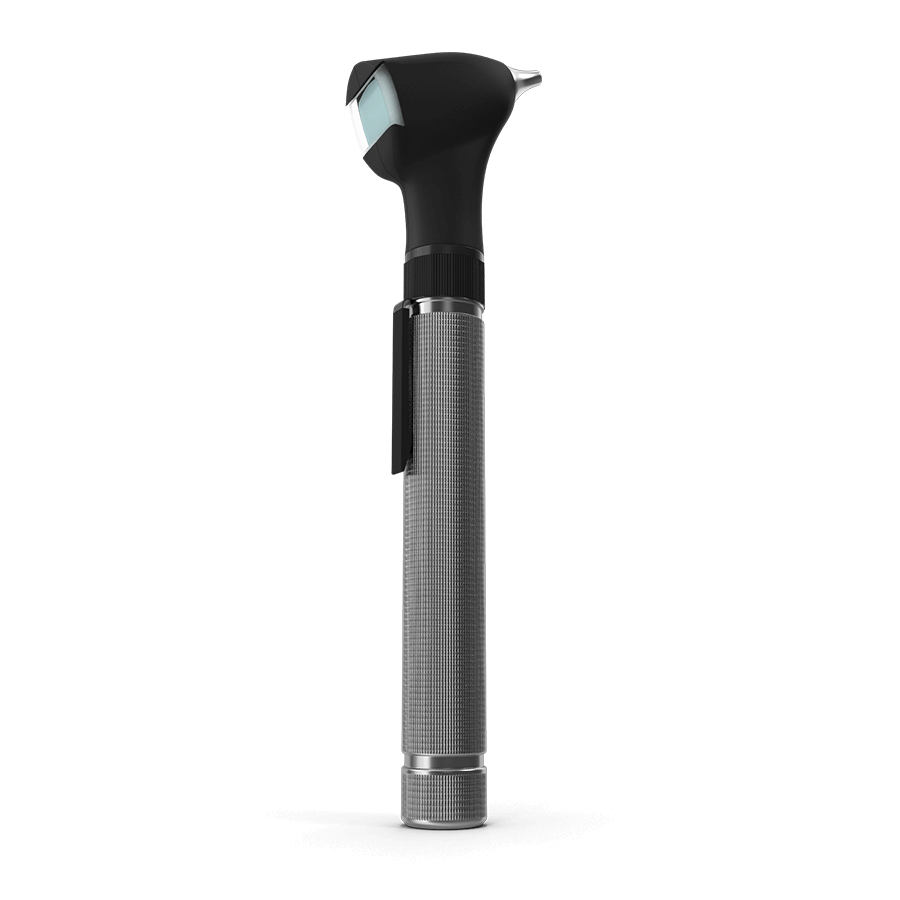
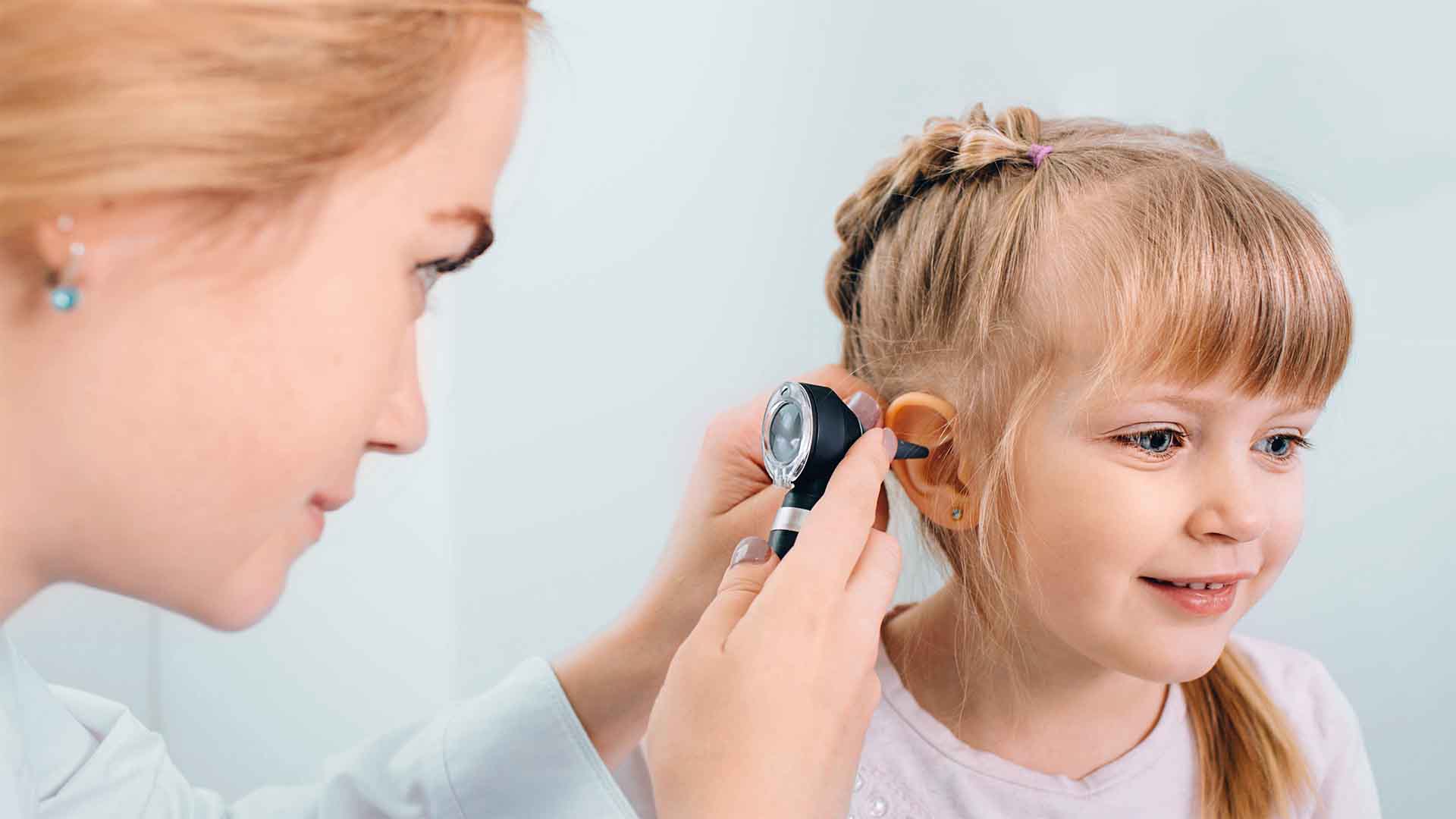
A comprehensive paediatric assessment may therefore include otoscopy, tympanometry, age-appropriate behavioural hearing tests, air- and bone-conduction thresholds, speech testing and, in younger children or particular clinical situations, objective measures such as otoacoustic emissions or auditory evoked potentials.
The test battery depends on the child’s age, developmental stage and the clinical question.
Reliability matters too. Young children do not simply perform a miniature version of an adult hearing test. Audiologists use techniques adapted to developmental ability, and occasionally more than one appointment is needed before a complete, ear-specific picture can be established.
A quiet room and a classroom are very different listening environments
One of the more difficult things for parents to understand is how a child can have a diagnosed hearing loss while appearing to hear quite normally at home.
There is no contradiction.
Audiometry is deliberately performed under controlled conditions. The child is listening for simple sounds in a quiet environment, often through earphones, with very little competing for attention.
A classroom is almost the opposite.
The teacher may be several metres away. Chairs move. Other children whisper. Ventilation systems produce background noise. Instructions may be given while the teacher is facing the board. Several voices can overlap.
A small reduction in audibility can matter more under those conditions than it does during a conversation across the kitchen table.
Studies of school-age children with slight or mild hearing loss have found that difficulties can become particularly apparent during demanding listening tasks and speech-in-noise conditions. Importantly, pure-tone thresholds alone do not predict every child’s functional performance.
This is why parents and teachers are valuable sources of information after diagnosis.
Does the child follow instructions consistently? Are difficulties greater in groups? Do they depend heavily on seeing the speaker’s face? Does performance change according to where they sit in the classroom? Do they appear to hear well one day and less well another?
None of these observations proves that hearing loss is responsible. Attention, language, learning and many other factors can produce similar behaviours.
They do, however, help the audiologist understand whether the measured hearing loss is having a meaningful effect outside the test room.
Does mild hearing loss always need treatment?
No. But it always deserves an appropriate management plan.
That distinction is important.
There is no single intervention that is correct for every child with mild hearing loss. Management depends on the type of loss, whether it is unilateral or bilateral, whether it fluctuates, the frequencies affected, the child’s age and communication development, and the difficulties observed in daily life.
For some children, monitoring may be appropriate.
For a child with otitis media with effusion, for example, NICE recommends reassessment and supportive listening strategies in many situations because the condition can resolve spontaneously. If hearing difficulties are having a significant effect on everyday life, earlier intervention may be considered.
Support at school can also be surprisingly practical.
Reducing unnecessary background noise, placing the child where they have good visual and auditory access to the teacher, gaining their attention before giving important instructions and checking that information has been understood can all improve access to communication.
Some children may benefit from hearing technology. Depending on the nature of the loss and the child’s needs, this can include hearing aids or remote microphone systems that improve access to a teacher’s voice in difficult acoustic environments.
But technology should not be prescribed simply because the audiogram crosses a particular line.
The decision should consider measurable audibility, functional listening, communication development, family priorities and the likely benefit in the environments where the child actually needs support.
Evidence on mild childhood hearing loss is developing. Some studies have found better language or auditory outcomes among children using amplification, while systematic reviews also show considerable variation between children and between studies.
That makes individual assessment more important, not less.
Follow-up matters because the diagnosis can change with the child
A hearing test taken at one moment in childhood should not be treated as a permanent description of how that child will hear forever.
Middle-ear conditions can resolve or recur. Some permanent hearing losses remain stable; others can progress. Communication demands also change dramatically as a child moves from nursery to primary school and later into more complex classroom environments.
A three-year-old listening to a parent from a metre away faces a very different auditory task from an eight-year-old trying to follow a teacher while twenty other children are moving around the room.
Follow-up therefore looks at more than whether the audiogram has changed.
It may include repeated hearing thresholds, middle-ear assessment, speech testing, discussion with parents and consideration of how the child is managing at nursery or school. Speech and language development may also need monitoring when there are concerns.
Recent research provides a useful reminder that the word “mild” should not lead either clinicians or families to assume that outcomes will automatically be mild as well. Studies published in 2026 continue to identify measurable differences in speech production and speech-in-noise performance in some children with mild bilateral sensorineural hearing loss.
At the same time, it would be equally misleading to suggest that every child with mild hearing loss will develop communication or academic difficulties.
Many do very well.
The purpose of follow-up is to find out which child is in front of us.
At AudioCare, the role of audiological assessment is not simply to place a label on an audiogram. It is to establish what type of hearing loss is present, understand how it behaves over time and help families decide what, if anything, needs to happen next.
“Mild” is useful terminology.
The child matters more than the terminology.
References