

Table of Contents
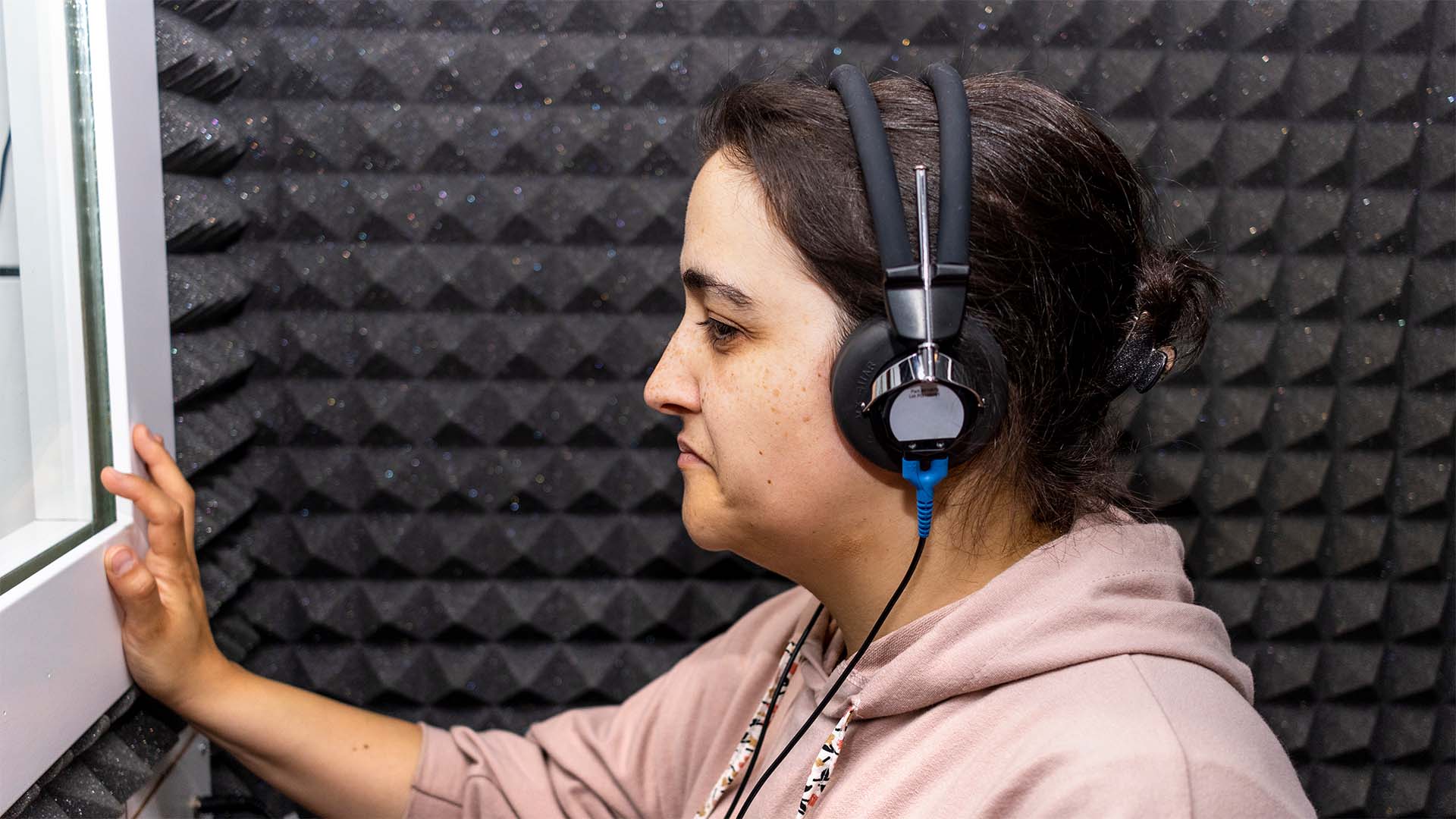
A hearing test can look deceptively simple from the patient’s side of the booth.
A tone appears. You press a button. The tone disappears. A few minutes later, a graph is produced.
But an audiologist does not assume that every response on that graph is automatically correct.
Pure-tone audiometry is a behavioural test. The equipment controls the sound, but the result still depends on how the person understands the task, responds to very faint signals and maintains attention throughout the assessment. The clinician’s job is therefore not simply to record button presses. It is to establish a pattern of responses that is sufficiently consistent to represent the person’s hearing thresholds.
Reliability is built throughout the test, from the condition of the ears and equipment to the way individual responses behave when the same question is asked again.
Reliability starts before the first tone
A trustworthy audiogram begins before the headphones go on.
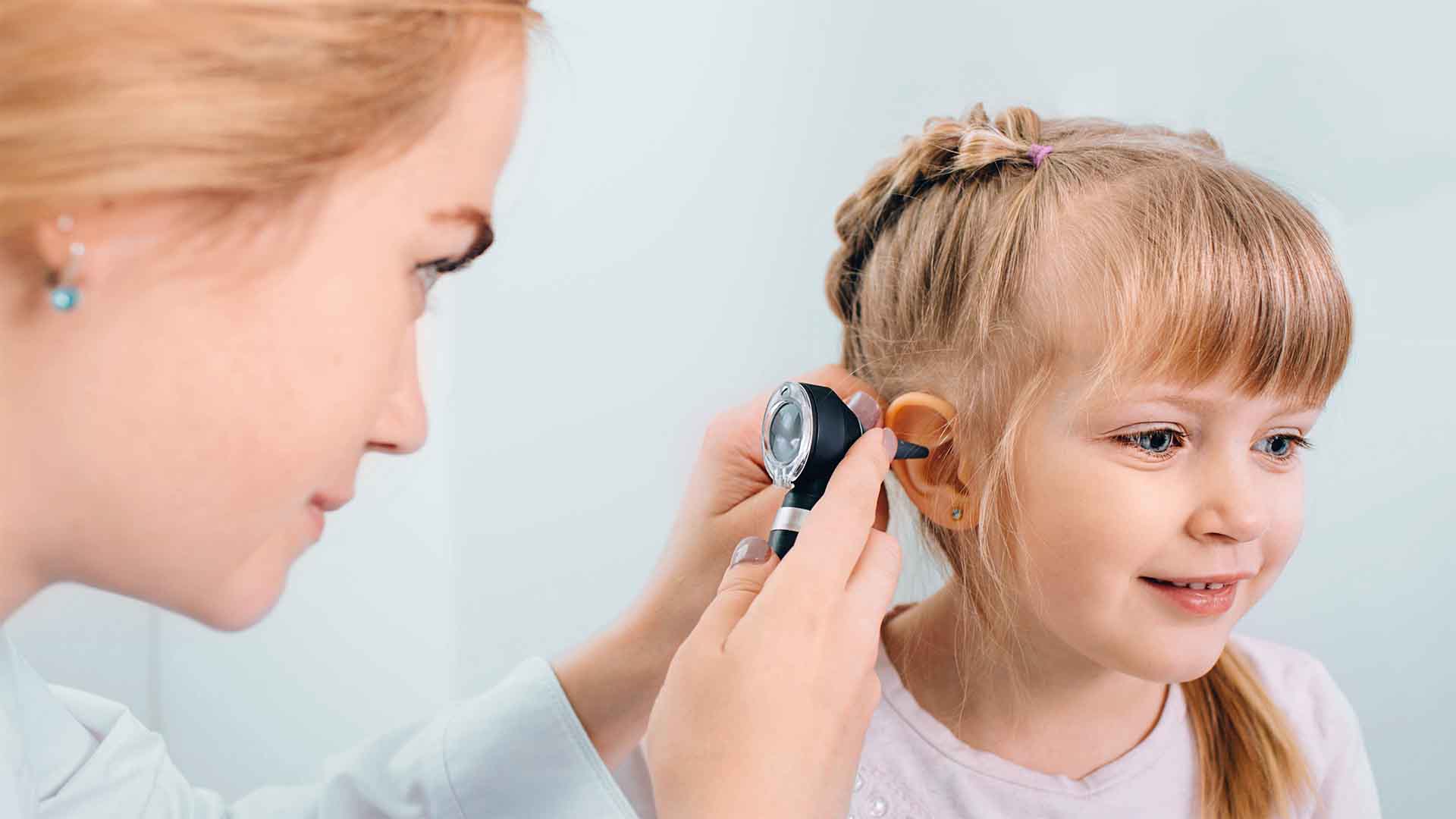
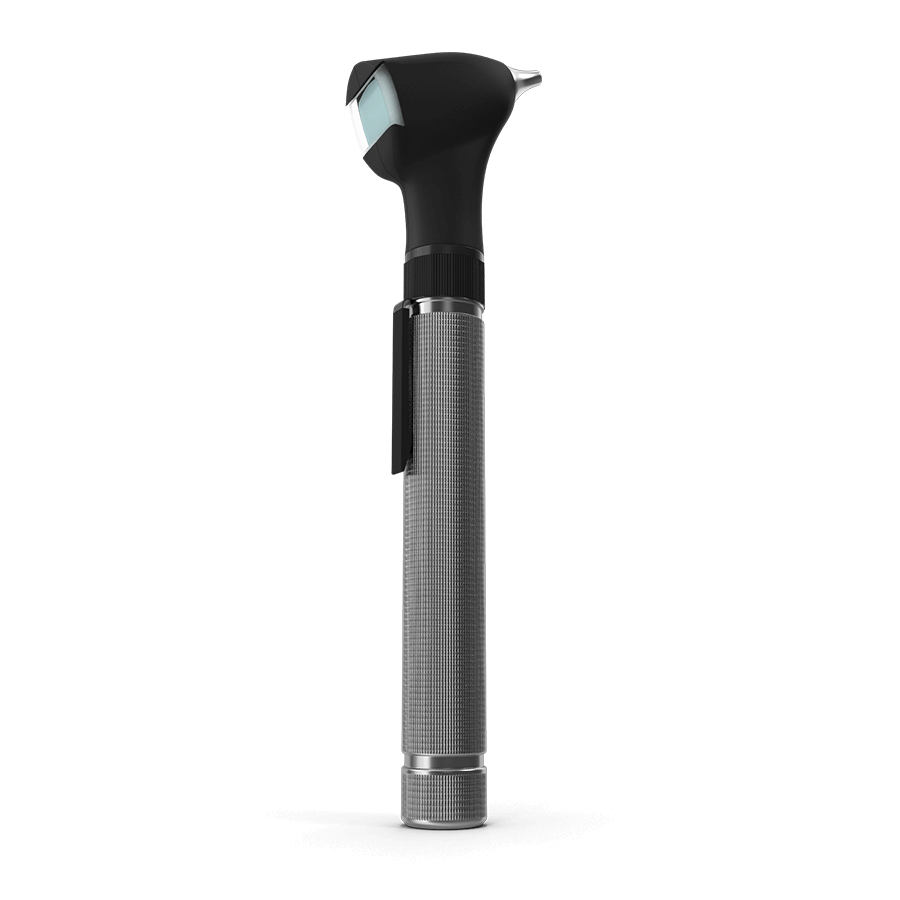
The audiologist first needs to know whether anything could interfere with the measurement. Otoscopy, for example, can identify excessive wax, abnormalities of the ear canal or other findings that may affect testing or require attention.
Recent exposure to loud sound can also matter. Temporary changes in hearing sensitivity can occur after significant noise exposure, which is why the British Society of Audiology recommends asking about loud noise during the previous 24 hours and considering retesting when the result may have been affected.
The test environment matters too. Background noise can mask very quiet test tones and make hearing thresholds appear poorer than they really are. This is why diagnostic audiometry is carried out in an appropriately controlled acoustic environment.
Then there is the equipment itself.
An audiometer does not become trustworthy simply because it switches on. Audiometers and their transducers are calibrated against technical standards, and routine checks are used to identify problems that could affect results.
Even the placement of the earphones matters. Incorrect positioning can alter the sound reaching the ear and reduce the protection they provide against environmental noise.
By the time the first threshold is measured, several potential sources of error have therefore already been considered.
The audiologist is looking for a pattern, not one response
Patients sometimes worry that they pressed the button too late, responded to a tone that was not there or missed something they “should” have heard.
That is rarely how the test is judged.
Audiometry is specifically designed so that a hearing threshold is not determined from one isolated response.
At each frequency, the audiologist approaches the threshold repeatedly. In the standard method, an audible tone is reduced until it is no longer heard, then increased again in smaller steps.
The process continues until responses are sufficiently consistent at the same level.
Under the BSA procedure, the hearing threshold is the lowest level at which the person responds on at least half of a series of ascending presentations, with at least two responses required at that level.
In practical terms, the audiologist is asking the same underlying question more than once: is this genuinely the level at which the tone becomes detectable?
The timing of the tones is deliberately varied as well.
If every tone appeared at perfectly regular intervals, it would become easy to anticipate when the next one should occur. Someone might press the button because they expect a sound rather than because they actually heard it.
Varying the interval and duration helps the clinician distinguish genuine auditory responses from anticipation.
The audiologist also observes how responses behave. Do they occur when the tone begins? Does the person release the button when it ends? Are responses becoming unusually hesitant? Are there frequent responses when no signal has been presented?
Those details can reveal whether the instructions need to be repeated or the test method adjusted.
One frequency is deliberately tested twice
There is a particularly useful internal check built into routine pure-tone audiometry.
Testing generally begins at 1000 Hz. After several other frequencies have been assessed, 1000 Hz is tested again in the first ear.
This is not duplication for its own sake.
It allows the audiologist to see whether a threshold obtained earlier in the appointment can be reproduced after the person has become familiar with the task.
According to the current BSA procedure, if the second 1000 Hz threshold is no more than 5 dB different from the first, the result is considered sufficiently consistent and the more sensitive threshold is recorded.
If the difference exceeds 5 dB, the variation should be investigated.
That does not automatically mean the person has performed the test incorrectly.
Perhaps the original instructions were not fully understood. The person may have become more confident about responding to very faint sounds as the test progressed. Attention may have changed, tinnitus may be interfering with the task, or the person may simply require reinstruction.
If necessary, other frequencies can be repeated or the ear retested.
The important point is that inconsistency is not ignored simply because a number has already appeared on the audiogram.
The test contains its own opportunity to question that number.
Results also need to make clinical sense
Consistency within the test is important, but an audiologist also considers whether the overall pattern is plausible.
The right and left ears are compared. Air-conduction and bone-conduction thresholds may need to be considered together. When sound presented to one ear could actually be detected by the opposite cochlea, masking may be required to establish an ear-specific result.
Otoscopy and middle-ear findings can also provide context.
If the audiogram suggests a conductive component but everything else points in a different direction, the clinician should not simply accept the graph without considering why the findings disagree.
The same applies when a result changes substantially from a previous test without any corresponding history or symptoms.
Sometimes the explanation is genuine change. Sometimes a technical or procedural factor needs to be excluded first.
Speech testing can provide additional information in selected cases, particularly when the person’s communication difficulties do not appear to fit neatly with the pure-tone thresholds.
This does not mean every audiological measure must produce an identical story. Different tests examine different aspects of hearing.
What matters is whether apparent discrepancies can be understood.
A reliable assessment involves clinical judgement, not merely collecting as many measurements as possible.
Some variation is normal
A reliable hearing test does not mean that every threshold will reproduce with absolute mathematical precision.
Hearing thresholds are measured in discrete steps, commonly 5 dB during clinical testing, and behavioural responses naturally contain some variability.
Attention changes. People become more familiar with the task. A very faint tone can genuinely sit close to the boundary between “heard” and “not heard”.
This is why audiologists interpret patterns rather than treating a small difference between two tests as proof that hearing has changed.
Context matters.
A minor variation at one frequency may have little clinical significance. A consistent shift across several frequencies, a clear change between ears or a result accompanied by new symptoms may deserve closer attention.
The circumstances of the test can also affect reliability.
Fatigue is one example. The BSA notes that lengthy testing can reduce reliability and suggests that a break may be useful when an assessment exceeds around 20 minutes.
Tinnitus can make it harder for some people to distinguish test tones from sounds they already perceive internally. Clear instructions, alternative tone presentation where appropriate and careful observation can help.
Attention, developmental ability, language barriers and physical difficulties with the response button may also require the procedure to be adapted.
A good audiologist does not expect every patient to behave like an ideal laboratory participant.
The test has to work with the person being tested.
Reliability is a pattern, not a single button press
An audiogram may ultimately look like a simple collection of symbols and lines, but there is more behind each threshold than one beep and one response.
The audiologist has considered the ears themselves, the acoustic environment, equipment performance, transducer placement, the patient’s understanding of the task, the consistency of responses and whether repeated measurements agree closely enough.
When something does not fit, it can be questioned, repeated or investigated further.
That is an important distinction.
A hearing test is not reliable because the equipment produces a graph. It is reliable because the process used to produce that graph contains checks designed to identify uncertainty.
At AudioCare, the audiogram is therefore treated as clinical information to be interpreted, not simply as a printout.
The patient does not need to worry about “passing” the test or pressing the button perfectly every time.
The audiologist’s job is to work through those responses until the pattern is clear enough to trust.