


Table of Contents
A change in hearing followed by dizziness can make the explanation seem obvious: both symptoms involve the ear, so they must have the same cause.
Sometimes they do. Sometimes they do not.
That distinction matters because “dizziness” covers several different experiences, from true spinning vertigo to light-headedness, instability or a vague sense of being off balance. Hearing changes are equally varied. They may be sudden or gradual, affect one ear or both, fluctuate or remain stable, and occur with tinnitus, pressure or no other ear symptoms at all.
From an audiological and ENT perspective, the useful question is therefore not simply whether hearing and balance are connected. We already know that structures responsible for both functions sit close together within the inner ear.
The more important question is whether the two symptoms belong to the same clinical problem in this particular person.
Answering that requires separate attention to hearing and balance rather than assuming that one automatically explains the other.
Shared anatomy does not guarantee a shared cause
The cochlea, responsible for hearing, and the vestibular organs, involved in balance and sensing head movement, are both located within the inner ear. Their signals also travel towards the brain through different divisions of the eighth cranial nerve.
Their proximity explains why some inner-ear disorders can affect hearing and balance at the same time.
But the two systems perform different jobs.
Balance also depends on information from the eyes, muscles, joints and nervous system. The brain continuously compares these signals to establish where the body is and how it is moving. A problem anywhere along that network can create dizziness or instability without altering hearing at all.
Likewise, many common causes of hearing loss do not produce vertigo.
Age-related hearing loss, for example, usually develops gradually without creating a spinning sensation. Noise-related hearing damage can affect auditory sensitivity while leaving the vestibular system clinically unaffected.
The reverse can also happen. A person may experience significant vertigo while audiometry remains normal.
This is why the statement “hearing and balance are connected” is anatomically correct but clinically incomplete. It identifies a possible relationship, not a diagnosis.
For the clinician, the timing and character of each symptom are often more informative than the simple fact that both are present.
The pattern can point in very different directions
Consider several people who all arrive with the same initial description: “My balance feels wrong.”
One experiences brief spinning whenever they roll over in bed or look upwards. Hearing has not changed. That pattern can be compatible with benign paroxysmal positional vertigo, or BPPV, a common vestibular disorder associated with displaced calcium carbonate crystals within the inner ear.
Another person develops severe vertigo lasting much longer, accompanied by nausea and difficulty walking, but has no hearing loss or tinnitus. Vestibular neuritis is one possible explanation because it affects the vestibular nerve and typically does not produce auditory symptoms.
Now consider someone who develops vertigo together with hearing loss and tinnitus. Labyrinthitis affects structures involved in both hearing and balance and can therefore produce that combination.
Ménière’s disease provides another, quite different pattern. It can cause episodes of vertigo together with fluctuating hearing loss, tinnitus and a sensation of fullness or pressure in the affected ear.
These examples demonstrate why hearing symptoms can be diagnostically valuable when assessing dizziness.
They also demonstrate why their absence matters.
Vertigo without hearing loss may point the investigation in one direction. Vertigo with fluctuating unilateral hearing loss may point it somewhere else. Feeling faint when standing up quickly may suggest that the problem is not primarily vestibular at all.
The word “dizzy” alone rarely provides enough information.
A useful consultation needs to establish whether the sensation is spinning, rocking, floating, faintness or instability; what triggers it; how long it lasts; whether it happens spontaneously; and what happens to hearing before, during and after an episode.
What the hearing assessment can actually answer
When dizziness or balance problems occur alongside a perceived hearing change, audiological testing can provide objective information that symptoms alone cannot.
Pure-tone audiometry establishes the quietest sounds a person can hear across different frequencies. Just as importantly in this context, it shows whether hearing is symmetrical or whether one ear behaves differently from the other.
That distinction can matter.
A gradual, broadly symmetrical hearing loss presents a different clinical picture from a newly developed or fluctuating unilateral loss.
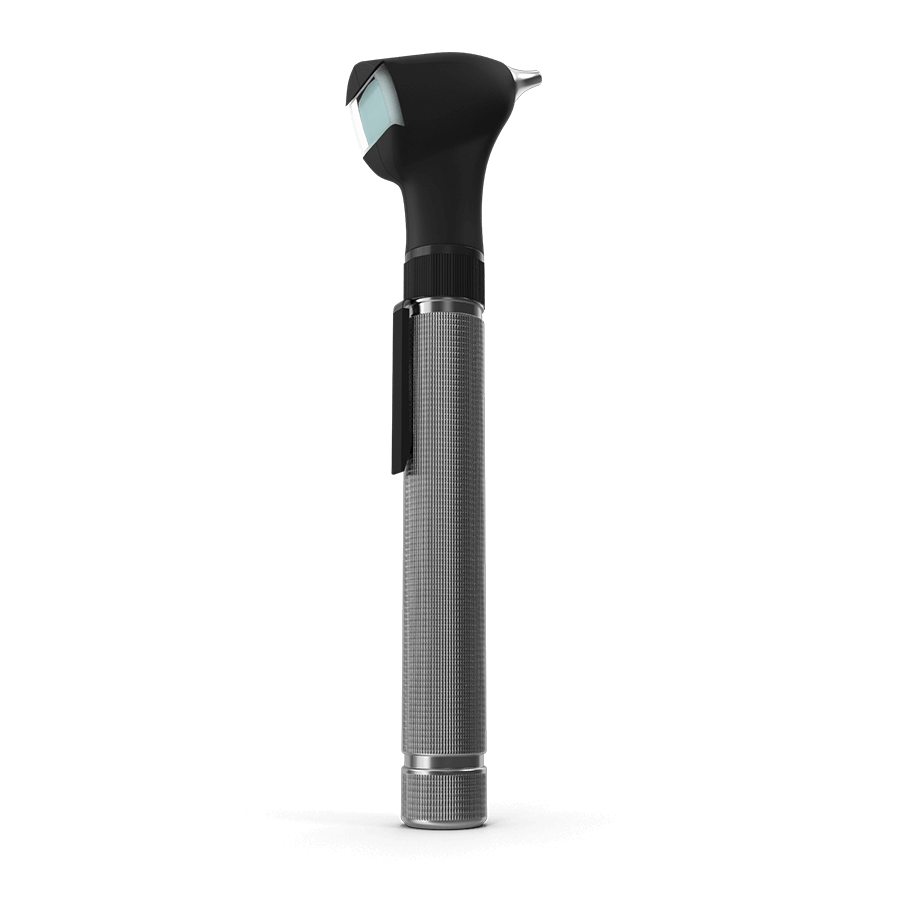
Speech audiometry adds information about how effectively spoken material is recognised. Video otoscopy allows the ear canal and eardrum to be examined, while tympanometry evaluates middle-ear pressure and eardrum mobility.
None of these tests diagnoses the cause of vertigo by itself.
That limitation is important. An audiogram is a hearing test, not a complete balance assessment.
Its value is to answer the auditory part of the problem accurately. Is hearing normal? Is there hearing loss? What type of pattern is present? Is one ear significantly different? Does the history suggest fluctuation?
At AudioCare, audiological testing can therefore form part of a broader investigation when hearing and balance symptoms occur together. The aim is not to force both complaints into a single explanation, but to establish precisely what is happening to hearing before deciding what needs to be investigated next.
Balance symptoms require their own line of enquiry
A normal hearing test does not mean that dizziness is imaginary, insignificant or unrelated to the vestibular system.
It means that the hearing component of the assessment has provided one piece of information.
Balance symptoms may require an ENT or vestibular assessment that examines a different set of clues. These can include eye movements, positional triggers, gait and the circumstances in which vertigo begins.
For suspected BPPV, for example, a positional manoeuvre such as the Dix-Hallpike test may be used to reproduce characteristic vertigo and observe associated eye movements.
Other presentations may require a wider medical investigation.
Dizziness can be associated with migraine, medication, blood-pressure changes, cardiovascular problems, neurological conditions and other causes outside the ear. Visual problems and reduced sensation from the feet and joints can also contribute to instability, particularly when several systems become less reliable at the same time.
This is why treating every balance complaint as an “ear problem” can delay the correct answer.
The same principle applies in reverse. A hearing difficulty should not automatically be attributed to whatever is causing the dizziness without appropriate testing.
Clinical reasoning works best when each symptom is characterised independently first. The results can then be brought together to determine whether there is one explanation or two.
Sometimes the combination changes the urgency
There is another reason not to treat hearing loss and dizziness casually when they appear together: some patterns require prompt medical assessment.
Sudden sensorineural hearing loss is one example.
NICE recommends immediate specialist assessment when unexplained hearing loss develops suddenly over three days or less and has occurred within the preceding 30 days. This should not be managed as routine gradual hearing loss or postponed to see whether it improves spontaneously.
Sudden hearing change accompanied by vertigo deserves particular attention.
Neurological symptoms also change the situation. Dizziness or vertigo associated with facial weakness, difficulty speaking, weakness or numbness in an arm or leg, double vision or other acute neurological signs requires urgent medical assessment rather than a routine hearing appointment.
The same principle applies to persistent or recurrent vertigo associated with unexplained hearing loss. NICE recommends specialist investigation when these symptoms occur together.
These recommendations are not intended to make every episode of dizziness alarming. Most dizziness does not signal a medical emergency.
They are intended to prevent a familiar symptom from disguising an important pattern.
Knowing whether hearing changed suddenly, whether one ear is affected and whether other neurological symptoms appeared can be more important than describing the dizziness as simply “bad”.
Two symptoms, two questions, one clearer pathway
When someone experiences hearing difficulty and imbalance at the same time, it is tempting to look for one elegant explanation.
Clinical reality is often less tidy.
Sometimes one inner-ear condition genuinely affects both systems. Sometimes a vestibular problem occurs while an unrelated hearing loss is already present. Sometimes hearing is normal and the balance complaint requires investigation elsewhere. And occasionally the combination identifies a situation in which referral should happen quickly.
A good assessment does not begin by deciding that hearing and balance must be connected.
It begins by asking two questions.
What has happened to hearing?
And what exactly is happening to balance?
At AudioCare, audiological assessment can establish the hearing profile, while ENT evaluation can investigate symptoms such as vertigo and recurrent imbalance and determine whether further testing or referral is appropriate.
That separation is not a weakness in the diagnostic process. It is what makes the process more precise.
The ear contains systems for both hearing and balance, but sharing the same neighbourhood does not mean they always share the same problem.
Sometimes the clearest answer comes from investigating each one on its own before putting the pieces back together.

References
- https://www.nice.org.uk/guidance/ng98/chapter/recommendations
- https://www.nidcd.nih.gov/health/balance-disorders
- https://www.nidcd.nih.gov/health/menieres-disease
- https://www.nidcd.nih.gov/health/sudden-deafness
- https://www.nhs.uk/conditions/labyrinthitis/
- https://www.nhs.uk/conditions/vertigo/
- https://audiocare.pt/pure-tone-speech-audiometry/
- https://audiocare.pt/comprehensive-ent-services/vertigo/