


Table of Contents
Hearing needs are not fixed for life.
A person may complete a hearing assessment, receive an appropriate recommendation and feel well supported in the situations that matter most. Months or years later, however, new difficulties may begin to appear in places that were never previously part of their routine.
This does not necessarily mean that their hearing has deteriorated or that their hearing aids are no longer suitable. Sometimes the most important change has occurred not in the ears, but in the life surrounding them.
Retirement can replace predictable working days with restaurants, travel and family gatherings. A new job can introduce online meetings and open-plan offices. Grandchildren can bring faster and higher-pitched voices into the home. Moving abroad may require communication in a second language and in unfamiliar acoustic environments.
At AudioCare, personalised hearing care is built around both the individual hearing profile and the situations in which hearing must perform. Because no two people hear in precisely the same way, and no individual lives exactly the same life forever.
A hearing solution reflects a particular moment in your life
An audiological assessment provides essential information about hearing sensitivity, speech recognition, ear health and middle-ear function. It also begins a more practical conversation about how the person communicates in everyday life.
Where do difficulties occur? Who is hardest to understand? Which environments are avoided? What would the person most like to improve?
The answers help the audiologist establish priorities. For someone who lives quietly and usually speaks to one person at a time, comfortable conversation at home may be the principal goal. For a professionally active person, meetings, telephone calls and rapid changes between listening environments may be more important.
These priorities are valid, but they reflect a particular stage of life. When circumstances change, the original assessment remains clinically useful, yet the practical demands placed on hearing may no longer be the same.
A hearing solution that worked extremely well for yesterday’s routine may therefore require refinement for today’s.
This is one reason why hearing care should not be treated as a single technical event. The initial fitting establishes an evidence-based starting point, but real life determines whether that starting point continues to meet the person’s needs.
The person’s hearing profile may remain relatively stable while the environments around them become more complex. Conversely, daily life may become quieter, making some previously important functions less relevant.
Personalised care must therefore recognise that hearing needs evolve over time, even when the hearing test changes very little.
Work, retirement and daily routines create different listening demands
Changes in work are among the clearest examples of how hearing needs can evolve.
A person moving from a private office to an open-plan environment may suddenly face competing voices, reverberation and constant background activity. A promotion may bring more meetings, presentations and group discussions. Remote work can increase reliance on video calls, headphones and computer audio.
Someone who previously functioned well may begin missing details, confusing similar words or feeling unusually tired after meetings. These experiences are sometimes interpreted as a sudden deterioration in hearing. In reality, the difficulty may simply have become more visible because the new environment is less forgiving.
A review should explore the exact circumstances in which communication breaks down. Is speech unclear only during online meetings? Does the problem occur when several colleagues speak? Is one side of a conference table harder to follow? Does understanding improve when visual cues are available?
Depending on the findings, the response may involve device adjustments, connectivity support, environmental changes or communication strategies. The solution should be based on the real problem rather than on a general assumption that everything needs to be made louder.
Retirement creates a different kind of transition. It is often imagined as a move towards quieter days, but for many people it introduces a more varied and socially active routine.
Professional communication may be replaced by lunches with friends, community activities, lectures, cultural events or frequent travel. Instead of speaking to familiar colleagues in predictable settings, the person may spend more time in restaurants, auditoriums and group conversations.
Someone who previously used hearing aids mainly for one-to-one discussions may now need greater support in noisy or rapidly changing environments. The opposite can also happen. A person leaving a demanding workplace may find that some previously essential functions are used less frequently, while television, relaxed conversation or outdoor awareness become more important.
Retirement is therefore not the end of an audiological story. It can mark the beginning of a different listening life.
Family, travel and new interests can shift what matters most
Family changes often alter hearing priorities in ways that feel deeply personal.
The arrival of grandchildren is a common example. Young children may speak softly, quickly or while facing away. Their voices can be higher in pitch than those of many adults, and their pronunciation is still developing. They also tend to communicate while moving, playing or competing with household noise.
A person who has little difficulty understanding an adult partner in a quiet room may therefore struggle to follow a grandchild during a family meal.
This difference can be emotionally significant. Missing a professional detail may be frustrating. Repeatedly missing a child’s story can feel far more important.
Other family changes matter too. A partner may develop a quieter voice. A relative may move into the home. Family meals may become larger and noisier. Communication may increasingly take place by video call with relatives living abroad.
Travel creates another group of listening challenges. Airports and railway stations combine announcements with crowd noise and reverberation. Guided tours may involve speech at a distance. Hotel rooms contain unfamiliar televisions, telephones and alarm systems. Wind and traffic can interfere with outdoor conversation.
Moving abroad introduces further complexity. Understanding speech in a second language usually provides fewer contextual clues than listening in one’s first language. An accent that is easy to follow in a quiet room may become difficult in a café, medical appointment or administrative setting.
This does not necessarily indicate a new hearing loss. It may reveal how hearing, language knowledge, room acoustics and background noise interact.
New hobbies can also change priorities. Joining a choir, attending lectures, learning a language or taking part in group exercise each creates a different acoustic environment. For some activities, speech clarity is central. For others, sound quality, spatial awareness or comfort over long periods may matter more.
These experiences provide useful clinical information. They show where the current approach succeeds and where further refinement may be beneficial.
Physical ability and technology can change even when hearing does not
Hearing needs can evolve even when hearing thresholds remain relatively stable.
Dexterity may alter how easily someone handles small batteries, domes or controls. Changes in vision can make indicators, charging connections or smartphone screens harder to use. Skin sensitivity or changes in the shape of the ear may affect physical comfort.
Technology use may also change considerably over time.
A person who once made few mobile calls may begin relying on a smartphone for family contact, navigation and appointments. Video communication may become more important. A new television, computer or tablet may create connectivity questions that did not exist at the original fitting.
These changes affect which features are genuinely useful.
AudioCare works exclusively with Signia hearing solutions when hearing aids are clinically appropriate. Signia offers different physical styles, rechargeable options, connectivity functions and automatic sound-processing features, but no function should be selected merely because it is available.
Technology has value when it addresses a real need and can be used confidently.
A meticulous fitting considers hearing thresholds, speech understanding, dexterity, visual ability, preferences and the technology already present in the person’s daily routine. A highly sophisticated feature can be ineffective if it is difficult to access, poorly understood or unrelated to the person’s real communication needs.
The same principle applies to physical style. A device that was easy to manage several years ago may become more difficult if hand movement, vision or sensitivity changes. In such cases, the issue may not be sound quality at all. It may be usability.
Personalised hearing care must consider the complete experience, not only what happens acoustically.
A review should identify whether hearing, technology or life has changed
When listening becomes more difficult, it is important not to assume the cause.
Hearing sensitivity may have changed. Earwax, middle-ear problems or other ear conditions may be affecting sound transmission. A hearing aid may need cleaning, maintenance or repair. Alternatively, the device may be functioning correctly while the person is now asking it to perform in more complex situations.
A structured review can help distinguish between these possibilities.
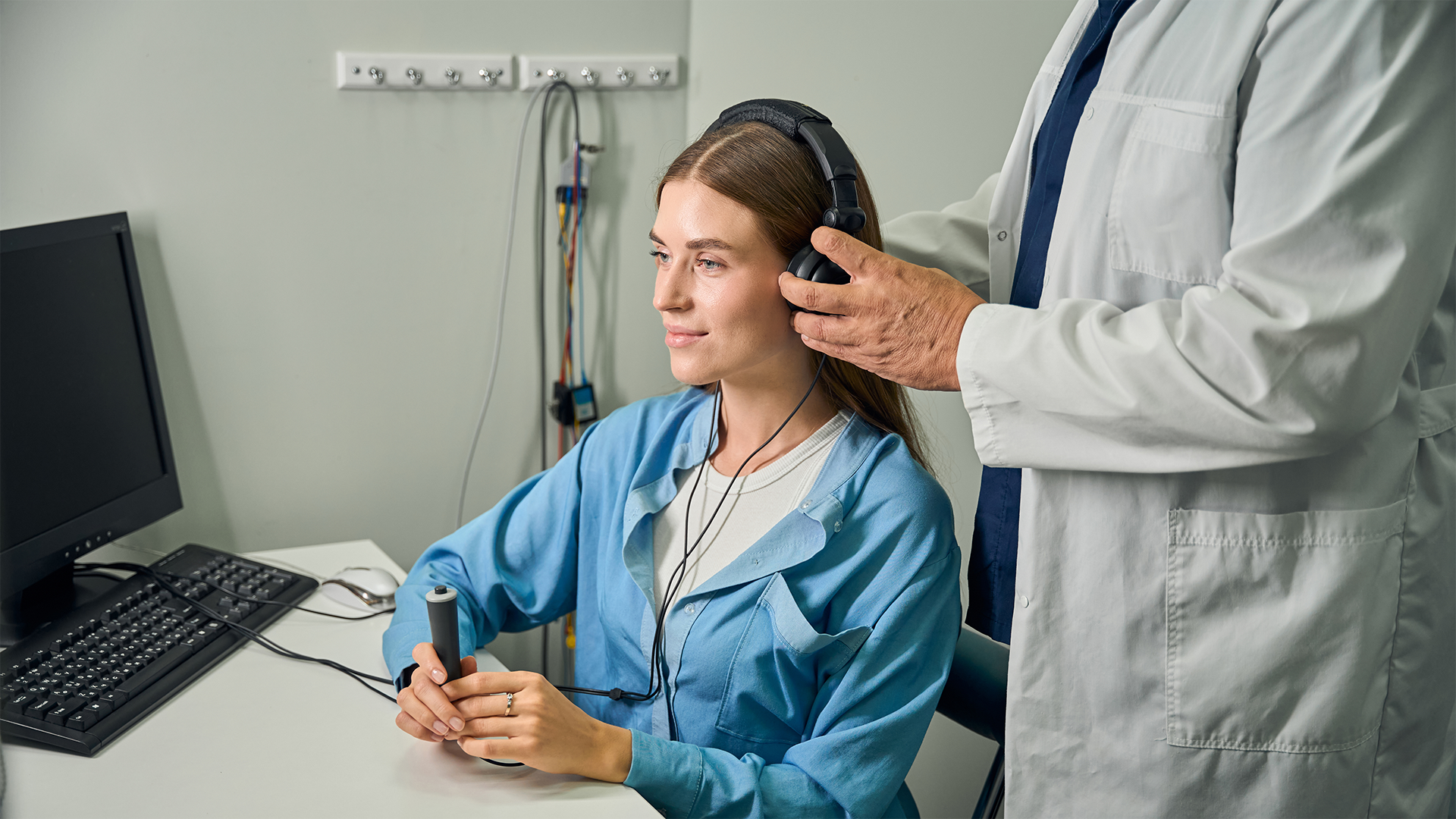
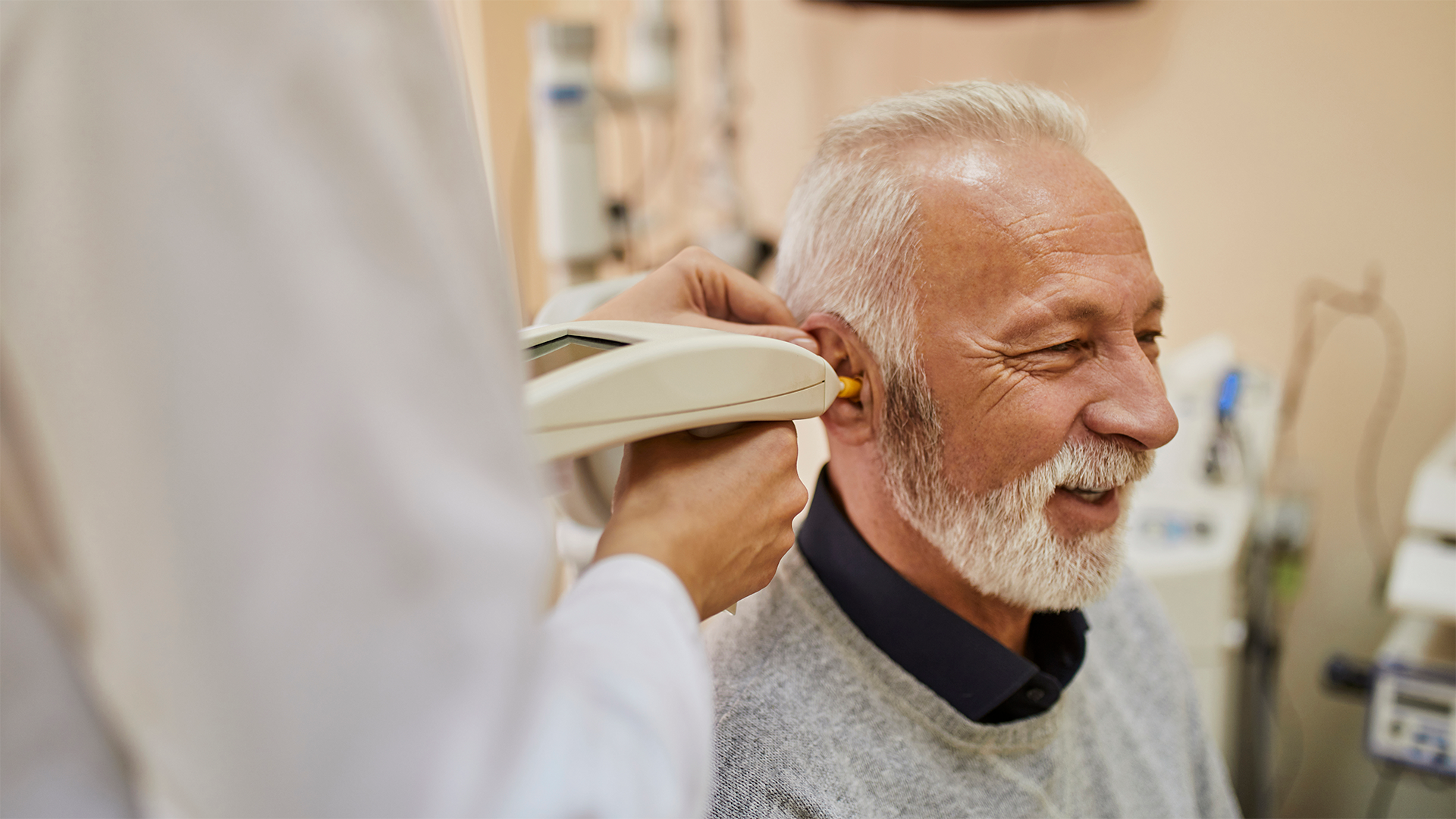
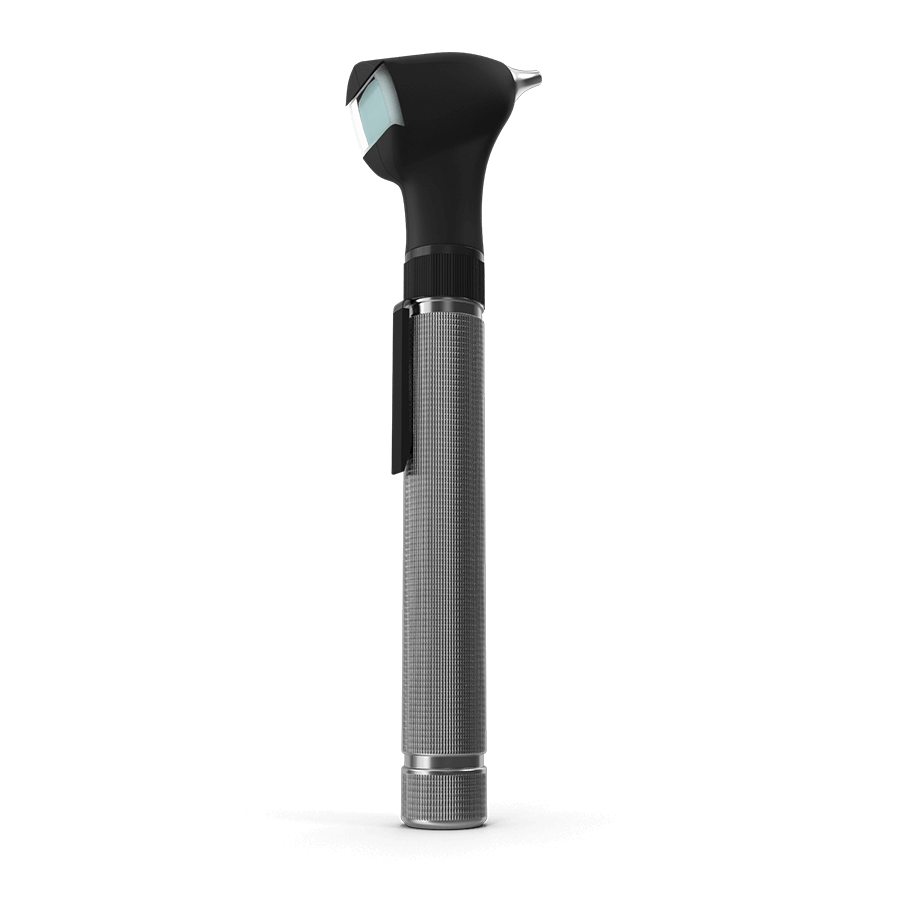
Video otoscopy allows the ear canal and eardrum to be examined. Pure-tone audiometry can identify changes in hearing thresholds. Speech audiometry provides information about the recognition of spoken words, while speech-in-noise testing can explore difficulties that emerge in competing sound.
AudioCare may also use Audible Contrast Threshold testing, or ACT, where appropriate. ACT provides additional information about a person’s ability to detect contrast within complex sound and can help guide the optimisation of hearing-aid features.
No single test describes the entire listening experience. Results must be considered alongside the environments, relationships and activities that have changed.
Follow-up is therefore part of hearing care, not an optional extra.
During a review, the audiologist may inspect and maintain the devices, analyse usage information, refine settings, reassess hearing and discuss communication strategies. Some difficulties can be addressed through relatively small adjustments. Others may require additional testing or a broader reassessment.
The objective is not constant technological replacement. It is continued clinical relevance.
A well-chosen hearing solution should be adaptable, but adaptation depends on precise information about what is and is not working in everyday life.
You do not need to wait until hearing becomes clearly worse before requesting a review. Consider an appointment when a new job, retirement, travel, family circumstances or social activity introduces listening situations that feel unexpectedly difficult.
A review is also appropriate when hearing aids become uncomfortable, harder to manage or less compatible with the technology used each day.
Before the appointment, identify two or three specific situations in which communication has changed. “I am not hearing well” gives the clinician limited information. “I understand my partner at home but lose the conversation when our grandchildren visit” is far more useful.
At AudioCare, personalised hearing care is meticulously developed around the nuances of each individual hearing profile. That process does not end after the first assessment or fitting.
It continues as routines, responsibilities, relationships and priorities evolve.
Because no two people hear in the same way. And even the same person will not always need to hear in the same way throughout life.

References
- https://www.nice.org.uk/guidance/ng98
- https://www.nice.org.uk/guidance/ng98/chapter/recommendations
- https://www.thebsa.org.uk/guidance-and-resources/current-guidance/
- https://www.thebsa.org.uk/wp-content/uploads/2023/10/OD104-80-BSA-Practice-Guidance-Speech-in-Noise-FINAL.Feb-2019.pdf
- https://www.thebsa.org.uk/wp-content/uploads/2023/10/REMS-2018.pdf
- https://audiocare.pt/pure-tone-speech-audiometry/
- https://audiocare.pt/speech-in-noise-act-test/
- https://audiocare.pt/guidance-and-fitting-of-hearing-aids/
- https://www.signia.net/en/hearing-aids/