
Table of Contents
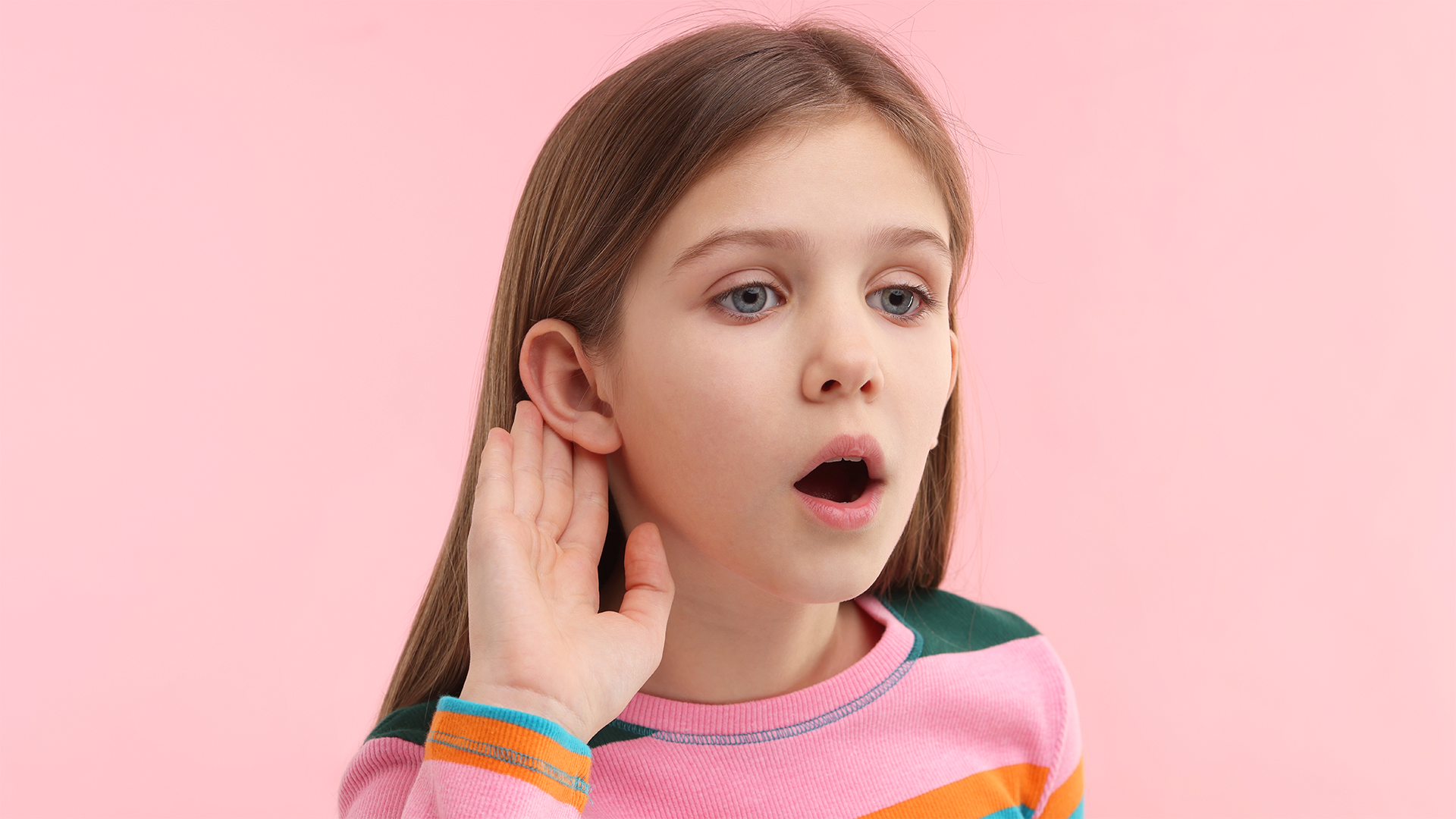
Children rarely announce that they are not hearing properly. Many have no reference point for what “normal” hearing should feel like. Others hear well in quiet places but struggle with distance, background noise or several people speaking at once.
This is why childhood hearing difficulties are often noticed through behaviour rather than through a direct complaint. A child may appear distracted, unusually tired, slow to follow instructions or reluctant to join group activities. These signs are easy to attribute to personality, concentration or school performance. Sometimes hearing is part of the picture.
From an audiologist’s perspective, one isolated behaviour does not prove a hearing problem. What matters is whether a pattern appears across different situations, particularly when the child must listen without visual cues or in noise.
Hearing problems rarely look like complete silence
Parents often imagine hearing loss as an obvious inability to hear voices or everyday sounds. In children, it can be far subtler. A mild, one-sided or fluctuating difficulty may allow a child to respond in many situations while still missing parts of speech.
A child may hear that someone is speaking but miss quieter consonants or word endings. Similar words become harder to distinguish when the room is noisy or the speaker is farther away, so the child relies on context, facial expression and guesswork.
This explains why some children seem to hear perfectly when a parent is nearby and facing them, yet misunderstand instructions called from another room. It also explains why a child may cope at home but struggle in a classroom, where sound competes with movement and other voices.
The small signs that appear at home
A familiar sign is a preference for higher television, tablet or music volume. The pattern matters more than one loud afternoon. Is the child consistently choosing a level that others find excessive? Do they sit unusually close to the screen?
Another sign is inconsistent response. A child may answer when they can see a parent but not when called from behind. This is often interpreted as selective listening. Concern increases when the same inconsistency appears repeatedly, across activities and with different people.
Younger children do not always ask for repetition. They may give an unrelated answer, copy what another child is doing or wait for someone else to react first. Some become skilled at watching faces and appear to understand until visual information is removed.
Changes in voice or speech can also be informative. A child may speak more loudly, confuse similar words, omit sounds or struggle with new vocabulary. These observations do not diagnose hearing loss, but they justify checking it.
What teachers may notice before parents do
The classroom is often where a subtle hearing difficulty becomes more visible. At home, conversations are usually close and familiar. At school, a child must follow new information from a greater distance while background noise changes constantly.
Teachers may report that the child watches other pupils before beginning a task, misses multi-step instructions or performs better when seated near the front. The child may answer incorrectly despite knowing the subject, especially when information is delivered verbally rather than shown.
Social situations can reveal another pattern. A child may manage well one-to-one but become quiet in a group, interrupt at the wrong moment or fail to follow quick exchanges.
Hearing loss is not the only possible explanation. Language, attention and social communication can produce similar behaviours. This is why assessment should consider the whole child rather than one symptom.
Speech, language and listening fatigue
Hearing gives children continuous access to the sound patterns from which they learn speech and language. When access is reduced, even temporarily, they may receive an incomplete version of spoken information.
Possible signs include delayed first words, unclear pronunciation, difficulty learning new vocabulary or problems following spoken directions. In older children, the signs may be weaker spelling, misunderstanding questions, difficulty with rapid speech or needing longer to respond.
A speech or language delay does not prove hearing loss. Many developmental and educational factors can create similar signs. Nevertheless, hearing should be checked rather than assumed to be normal. An assessment helps determine whether hearing contributes to the difficulty.
Listening fatigue also matters. A child who hears inconsistently may spend much of the day reconstructing incomplete sentences. That extra effort can reduce the energy available for learning and social interaction. Tiredness or difficult behaviour late in the day may reflect how hard listening has become.
Why hearing can change from one day to the next
One of the most common causes of temporary hearing reduction in children is otitis media with effusion, commonly called glue ear. Fluid collects behind the eardrum and reduces how efficiently sound travels through the middle ear. Sounds may seem muffled, although younger children often say nothing.
Glue ear can affect one or both ears and may fluctuate. Parents may therefore see apparently contradictory behaviour: good responses in quiet, difficulty at a distance, improvement for a few days and renewed problems after a cold.
Other possible causes include earwax blockage, ear infections, congenital or acquired sensorineural hearing loss and, less commonly, conditions affecting other parts of the hearing pathway. Excessive noise can also damage hearing, which is relevant for older children and teenagers.
Not every difficulty understanding speech is caused by reduced hearing sensitivity. Some children have normal routine hearing results but struggle with complex auditory information, especially in noise. Symptoms, ear health, developmental history and test results must therefore be interpreted together.
What a careful hearing assessment can reveal
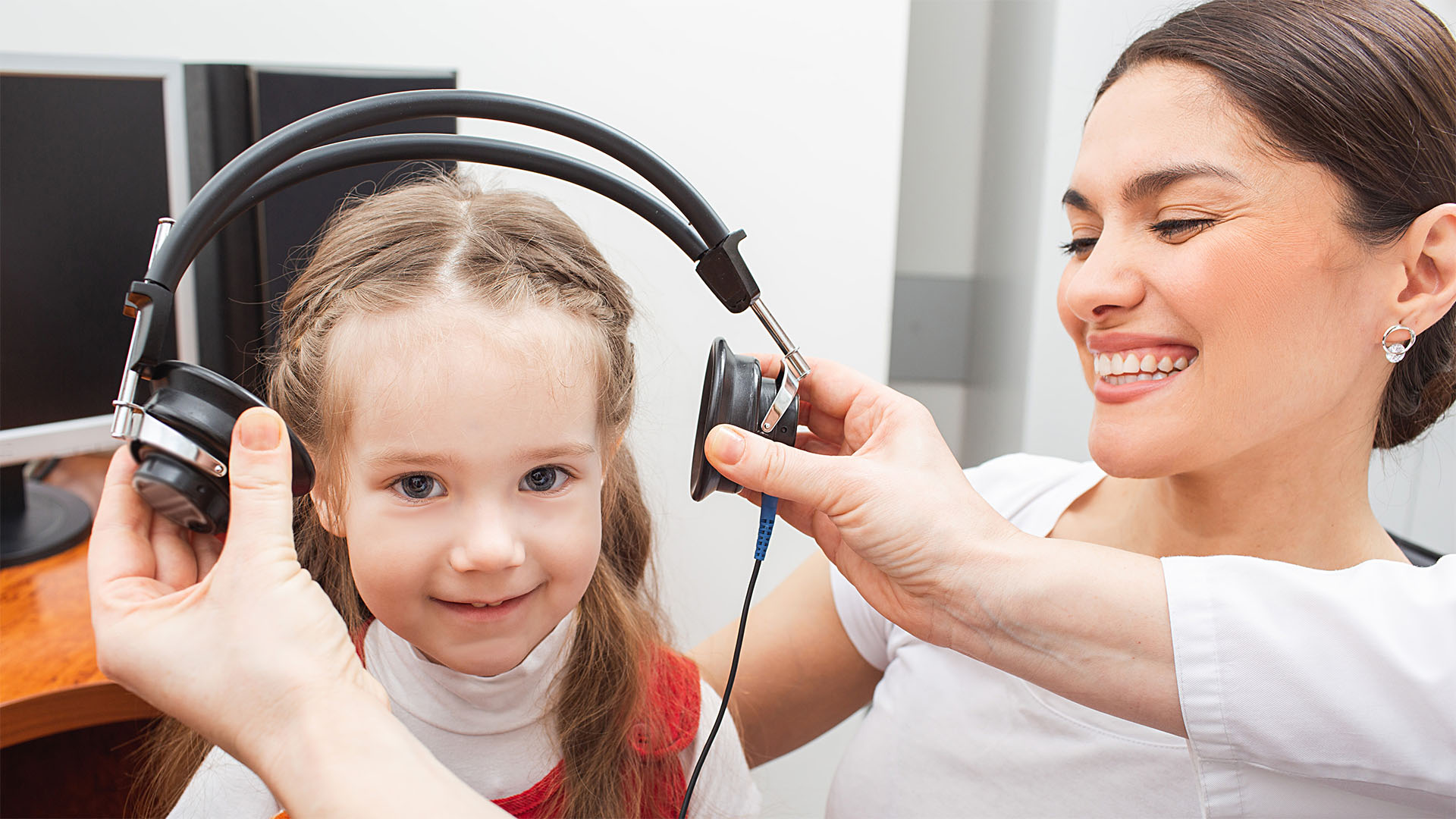
A proper assessment is adapted to the child’s age, development and ability to participate. Younger children may respond to sounds through play or visual rewards, while older children can often complete tests similar to those used with adults.
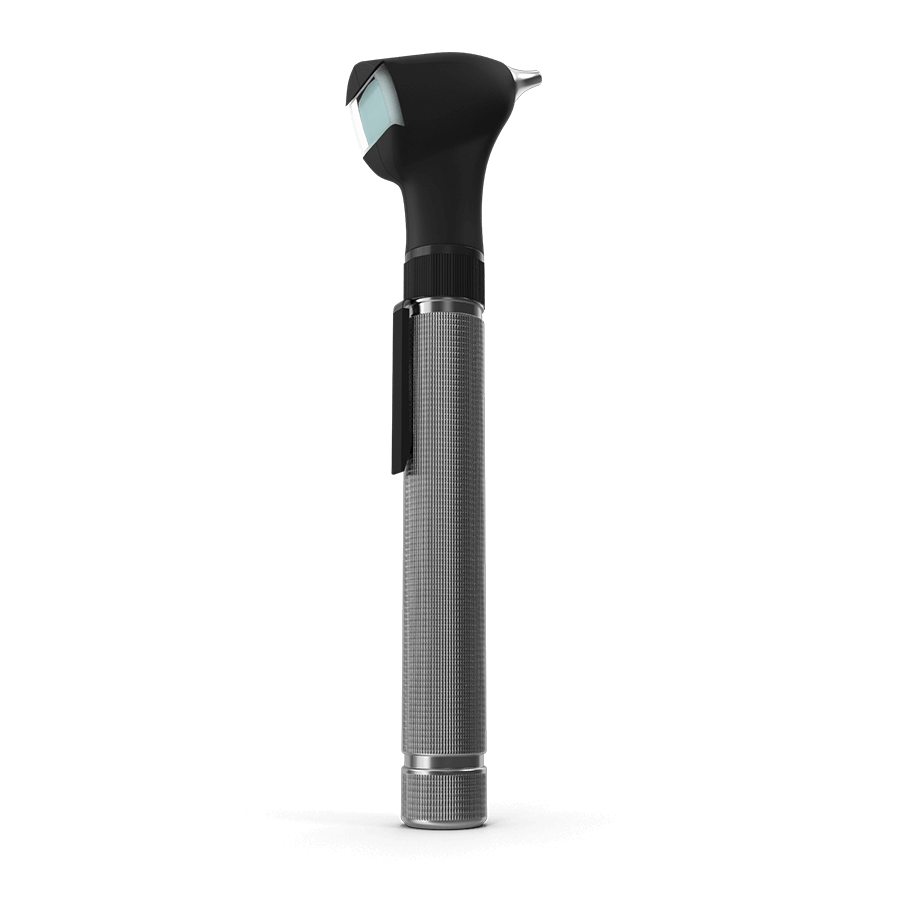
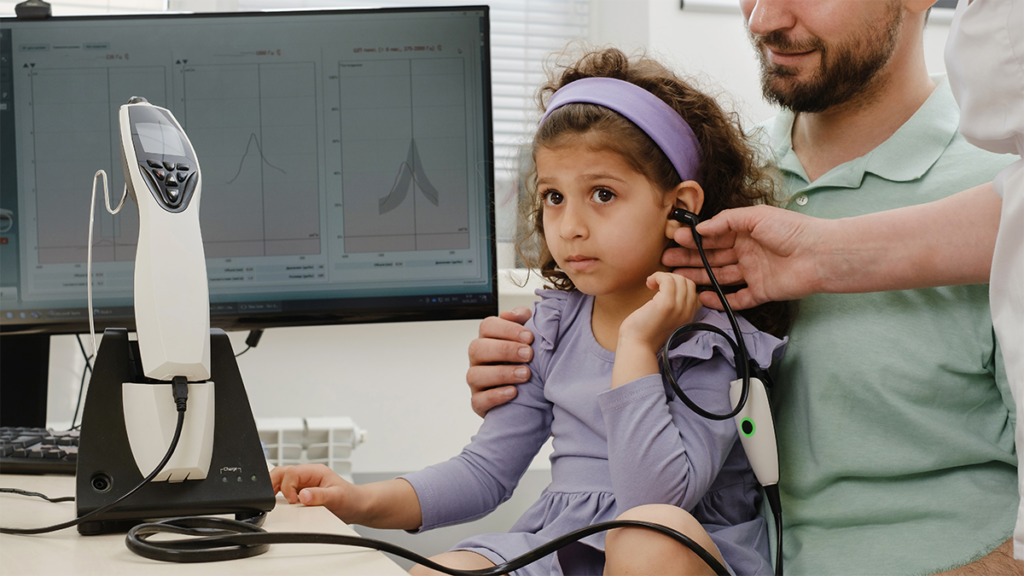
The clinician first listens to the parents’ concerns and identifies where the problem occurs. Video otoscopy can inspect the ear canal and eardrum. Tympanometry assesses middle-ear function and can help identify fluid or pressure problems. Age-appropriate hearing tests estimate the softest sounds the child can detect, while speech testing may explore how clearly spoken information is recognised.
At Audiocare, these findings are considered together rather than treated as isolated numbers. A normal-looking ear does not replace a hearing test, and a hearing threshold alone does not explain every classroom difficulty. The aim is to determine whether hearing is normal, temporarily reduced, permanently affected or unlikely to be the main cause.
Some children need more than one appointment before reliable conclusions can be reached. Attention, confidence and familiarity with the task can influence responses.
When observation should become action
Arrange an assessment when a child repeatedly fails to respond, asks for repetition, increases device volume, develops unclear or delayed speech, struggles after ear infections or shows an unexplained change in school performance.
More urgent medical advice is appropriate when hearing changes suddenly, deteriorates over days or weeks, or occurs with ear discharge, significant pain or marked dizziness.
For less urgent concerns, keep a brief record. Note whether difficulties occur in quiet or noise, at a distance, after colds or mainly at school. Ask the teacher for examples rather than a general judgement such as “not concentrating”. These details help the audiologist choose and interpret the most useful tests.
A hearing test may identify a treatable middle-ear problem, reveal a hearing loss that requires support or simply provide reassurance. Each outcome is valuable.
Children do not always have the language or awareness to explain what they are missing. Careful observation, followed by an appropriate assessment, gives their behaviour a fairer and more accurate interpretation.
References
- Centers for Disease Control and Prevention — About Hearing Loss in Children
- National Institute on Deafness and Other Communication Disorders — Your Baby’s Hearing and Communicative Development Checklist
- National Institute for Health and Care Excellence — Otitis Media with Effusion in Under 12s: NICE Guideline NG233
- NHS — Glue Ear
- NHS — Hearing Tests
- British Society of Audiology — Current Guidance
- Audiocare — Hearing Assessment and Audiology Services