


Table of Contents
If both ears seemed to change together, most people would probably recognise the problem as hearing-related. When only one ear feels different, the reaction is often less certain.
Perhaps the telephone sounds clearer on one side. Perhaps one ear feels blocked while the other seems completely normal. A television programme may suddenly sound unbalanced, or tinnitus may appear in just one ear.
There are many possible explanations, and most are not dramatic. Earwax, inflammation, middle-ear pressure and other relatively common conditions can all affect one ear more than the other.
But unilateral hearing change deserves more attention precisely because hearing is normally assessed comparatively. When the two ears behave differently, that asymmetry becomes clinically useful information.
The question is not simply, “Is one ear worse?”
It is: “Why are the ears behaving differently, how quickly did that difference develop, and what type of hearing change is present?”
One-sided hearing change is a pattern, not a diagnosis
People often describe unilateral hearing difficulty in very different ways.
One ear may feel muffled. Speech may seem softer on one side. Music may lose some of its balance. A person may instinctively move the telephone from one ear to the other because one side is noticeably clearer.
Those experiences do not identify the cause.
A blockage of earwax can reduce sound reaching the eardrum. Inflammation of the ear canal can alter hearing temporarily. Fluid or pressure changes in the middle ear can also create a conductive hearing loss, meaning that sound is not being transmitted efficiently through the outer or middle ear.
Other cases involve the inner ear or auditory pathway and produce sensorineural hearing loss.
The distinction matters because these categories are managed differently.
This is why an assessment should begin before assumptions are made.
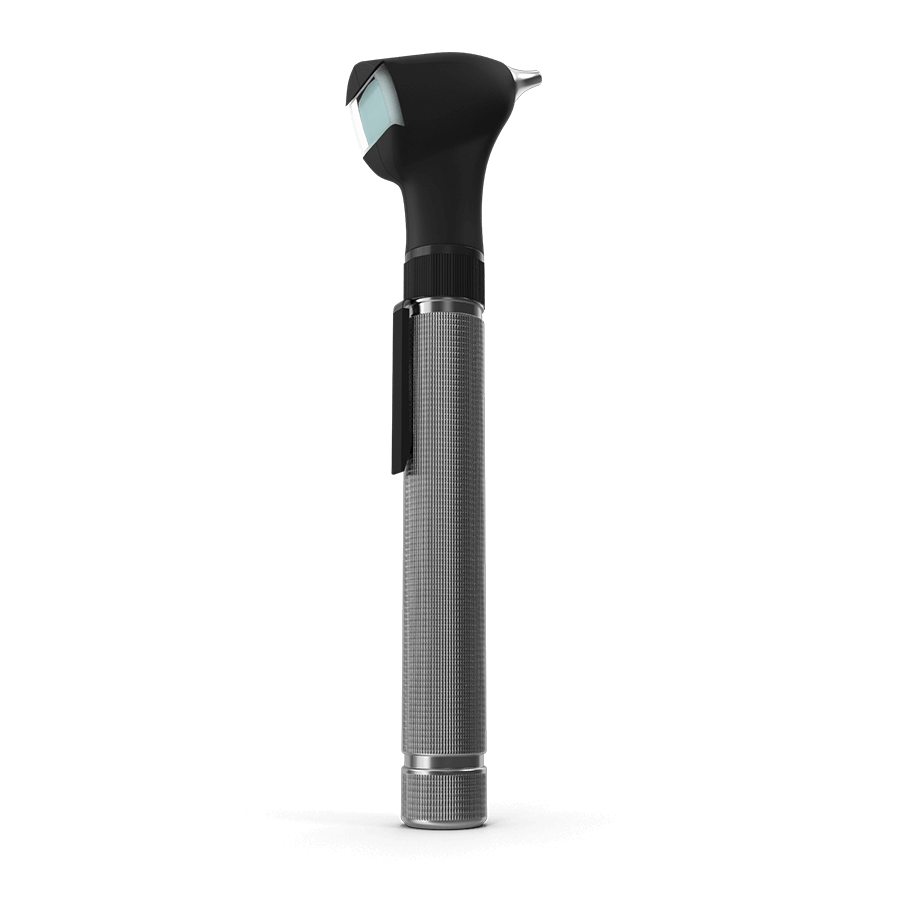
At AudioCare, video otoscopy can help determine whether the ear canal and eardrum show an obvious explanation such as excessive wax or another visible abnormality. Tympanometry can then provide information about middle-ear pressure and the mobility of the eardrum when clinically indicated.
Pure-tone audiometry answers another question: how sensitive is each ear to sound across different frequencies?
Only once these pieces are considered together can the clinician begin to establish whether the asymmetry is conductive, sensorineural, mixed or potentially temporary.
One-sided hearing change is therefore not a diagnosis in itself. It is a finding that tells us where to look more carefully.
The difference between the ears can be more important than the absolute number
An audiogram is often discussed in terms of how much hearing loss someone has.
With asymmetric hearing, another comparison becomes important: how do the two ears differ from each other?
A person may have relatively mild hearing loss overall, yet show a clinically meaningful difference between left and right ears at particular frequencies.
That pattern can influence the next step.
Pure-tone audiometry measures each ear independently, which allows the audiologist to identify not only the degree and configuration of hearing loss but also its symmetry.
Speech audiometry can add another layer. Sometimes the difference is not limited to detecting tones. One ear may also perform differently when recognising spoken words.
That information needs careful interpretation.
No single asymmetry automatically identifies a particular disease, and small differences between ears are not unusual. Test reliability, previous noise exposure, age, medical history and the configuration of the hearing loss all matter.
However, persistent or unexplained sensorineural asymmetry can justify specialist investigation.
NICE guidance, for example, recommends considering MRI of the internal auditory canals in adults with sensorineural hearing loss and no localising neurological signs when pure-tone testing shows an asymmetry of 15 dB or more at two adjacent frequencies among 0.5, 1, 2, 4 and 8 kHz.
That does not mean an asymmetrical audiogram indicates a tumour.
The purpose of such criteria is almost the opposite: to identify which patterns deserve further investigation rather than guessing at the cause.
One uncommon condition that clinicians may need to exclude in appropriate cases is vestibular schwannoma, a benign tumour affecting the vestibulocochlear nerve. Most people with asymmetric hearing loss do not have one, but unexplained asymmetry is one reason medical imaging may sometimes enter the diagnostic pathway.
Good audiology is not about turning every difference into a red flag. It is about knowing which differences should not be ignored.
How quickly the hearing changed can alter the urgency
The timeline is one of the first things an audiologist or ENT specialist should establish.
A gradual difference that has developed over months or years presents a very different clinical situation from an ear that suddenly became noticeably worse yesterday.
Sudden sensorineural hearing loss is particularly important.
It usually affects one ear and can develop all at once or over a period of up to three days. Some people first notice it when they wake up, use the telephone or realise that sound has unexpectedly become much quieter on one side.
Others assume that the ear is blocked.
That assumption can cause delay.
Earwax and middle-ear problems can certainly produce sudden muffling, which is why examination is important. But when an external or middle-ear explanation is not present, sudden sensorineural hearing loss requires prompt medical assessment.
NICE recommends that unexplained hearing loss developing suddenly over three days or less within the previous 30 days should be referred immediately for specialist assessment, with the person seen within 24 hours.
Rapid deterioration over a longer period also matters. Hearing that worsens significantly over four to 90 days, when not explained by an outer- or middle-ear cause, warrants urgent specialist referral.
These timeframes are not intended to make people anxious about every blocked-ear sensation.
They exist because speed changes the clinical meaning of the symptom.
A person who has gradually preferred one ear for telephone calls over several years is presenting a different problem from someone who could hear normally yesterday and cannot hear properly from one ear today.
That difference should never be lost in the phrase “my hearing has changed”.
Other symptoms can make the asymmetry more informative
Hearing rarely needs to be interpreted in isolation.
A one-sided change becomes more clinically informative when accompanied by other symptoms.
Persistent tinnitus in the same ear is one example. Tinnitus is common and often occurs without serious underlying disease, but persistent unilateral tinnitus is one of the patterns for which NICE recommends considering specialist referral.
Vertigo can also alter the picture.
Fluctuating unilateral hearing loss combined with episodic vertigo, tinnitus or a sensation of fullness may suggest a different diagnostic pathway from stable asymmetrical hearing loss without vestibular symptoms.
Ear pain, discharge, recurrent infection and abnormal findings on examination point in other directions again.
Neurological symptoms require particular attention.
Acquired unilateral hearing loss accompanied by altered facial sensation or facial weakness on the same side warrants immediate specialist assessment. If stroke is suspected, emergency stroke pathways take priority.
The important principle is not to memorise a catalogue of diseases.
It is to recognise that the same hearing result can carry different significance depending on the symptoms around it.
This is why a proper assessment begins with history rather than equipment.
When did the difference begin? Was it sudden or gradual? Is it stable or fluctuating? Is there tinnitus? Vertigo? Ear pressure? Pain? Has there been recent infection, significant noise exposure, medication change or trauma?
Those questions determine how the test results should be read.
A closer look does not mean assuming the worst
When patients hear that asymmetric hearing sometimes requires further investigation, the natural reaction can be concern.
That is precisely why careful explanation matters.
There are many benign and treatable reasons for one ear to behave differently from the other. Wax can be removed. Middle-ear problems can resolve or be treated. Long-standing asymmetrical hearing loss may simply require appropriate hearing management.
The purpose of investigating asymmetry is not to make a rare diagnosis more likely.
It is to avoid overlooking the cases in which the difference matters.
At AudioCare, an appropriate first assessment can include clinical history, video otoscopy, pure-tone and speech audiometry and, where indicated, tympanometry. These tests help establish whether the change originates from an obvious outer- or middle-ear problem, whether sensorineural hearing loss is present and how significant the difference between the ears actually is.
If the findings fall outside what should be managed routinely in audiology, ENT assessment or further diagnostic investigation can then be recommended.
That sequence matters.
A hearing aid should not simply be fitted to an unexplained unilateral loss before the underlying pattern has been properly considered. Equally, every small difference on an audiogram does not require extensive investigation.
Clinical judgement sits between those two extremes.
Hearing is naturally individual, and the two ears are rarely perfect mirror images. But when one side changes unexpectedly, progressively or significantly, comparison becomes one of our most useful diagnostic tools.
The aim is not to make both ears look identical on paper.
It is to understand why they do not.
And when one ear starts telling a different story from the other, it deserves to be listened to carefully.
References