
Table of Contents
A hearing aid should never be the starting assumption.
When someone arrives at an audiology appointment because conversations have become harder to follow, the television seems less clear or one ear simply feels different, the first task is not to decide which device might suit them. It is to understand what is happening.
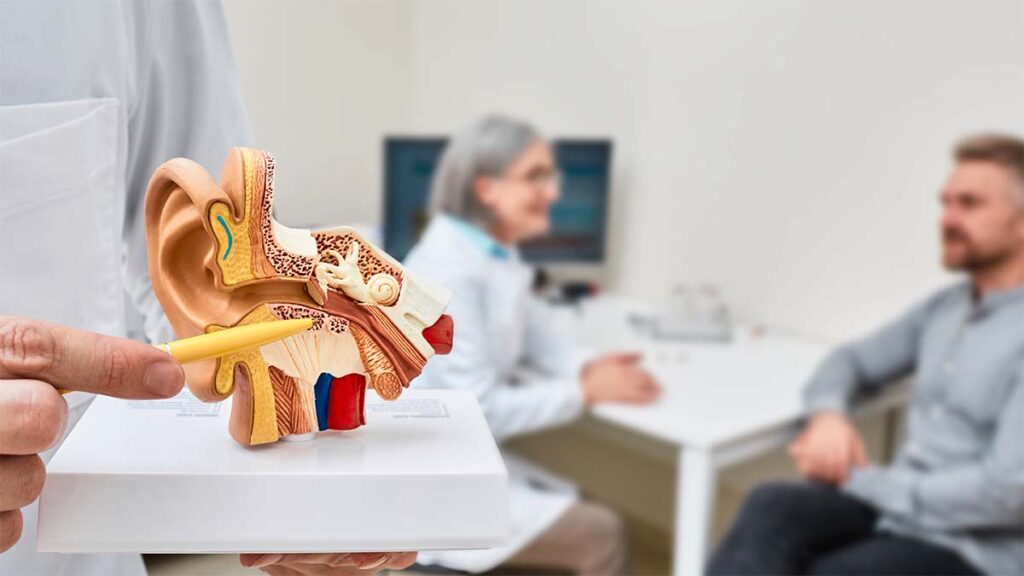
That distinction matters because “I am not hearing as well as I used to” can describe very different situations. The problem may involve permanent inner-ear hearing loss, but it may also be related to the outer or middle ear. Hearing may be reduced equally in both ears or very differently between them. A person may detect quiet sounds reasonably well yet struggle disproportionately with speech. Occasionally, the pattern or associated symptoms indicate that medical assessment should come before any discussion of amplification.
A proper hearing-aid recommendation therefore comes at the end of an assessment process, not at the beginning.
The first question is not “Which hearing aid?”
A useful audiology consultation starts with a conversation.
When did the difficulty begin? Has it changed gradually or suddenly? Is one ear worse? Is speech particularly difficult in groups or background noise? Are there symptoms such as tinnitus, ear pain, discharge, pressure or dizziness? Has there been previous ear surgery, significant noise exposure or a relevant medical history?
These details are not administrative background. They influence what should be tested and how the results should be interpreted.
The situations in which hearing causes difficulty matter just as much. Someone who manages well in quiet but loses track of conversation in meetings presents a different problem from someone who struggles even with one-to-one speech at home. The audiogram may eventually show similar thresholds in two people whose everyday experience is quite different.
NICE guidance reflects this broader approach. Adult audiological assessment includes not only test results but also hearing and communication needs, relevant symptoms, expectations and the effect of hearing difficulty on everyday life.
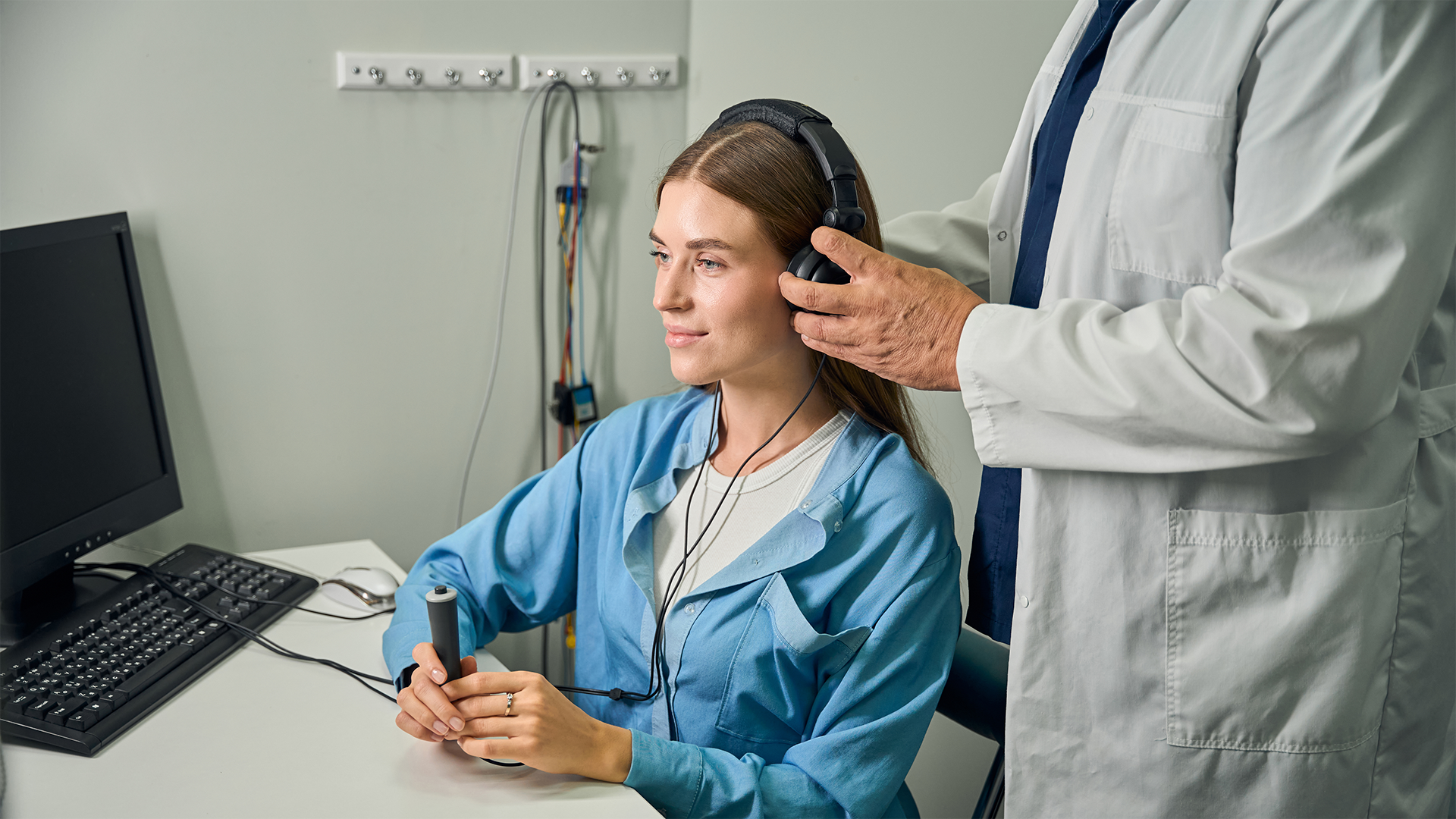
This is one reason a hearing test cannot be reduced to sitting in a booth and pressing a button when a beep is heard.
Looking at the ear comes before interpreting the hearing
Before considering amplification, the ear itself needs to be examined.
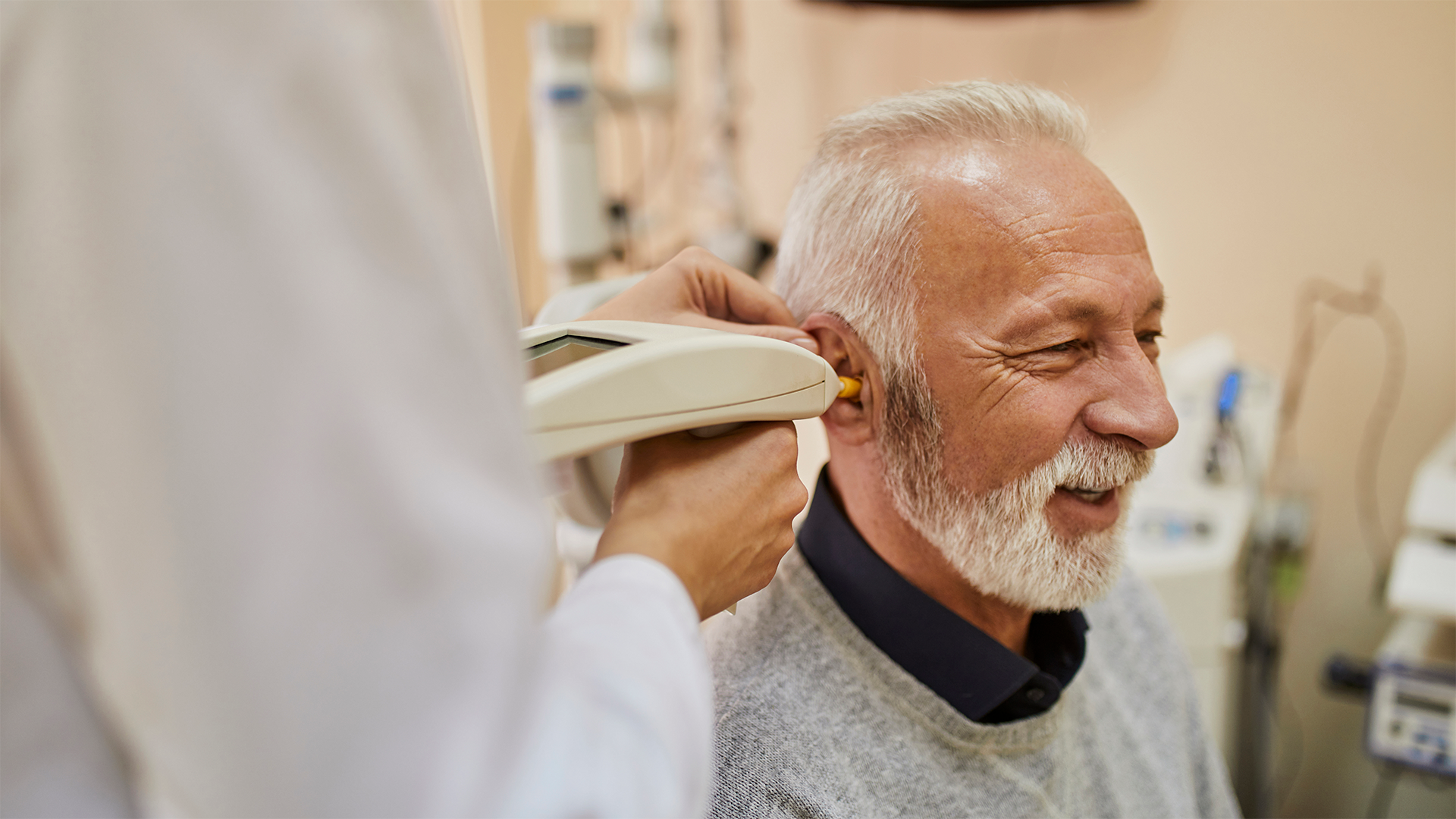
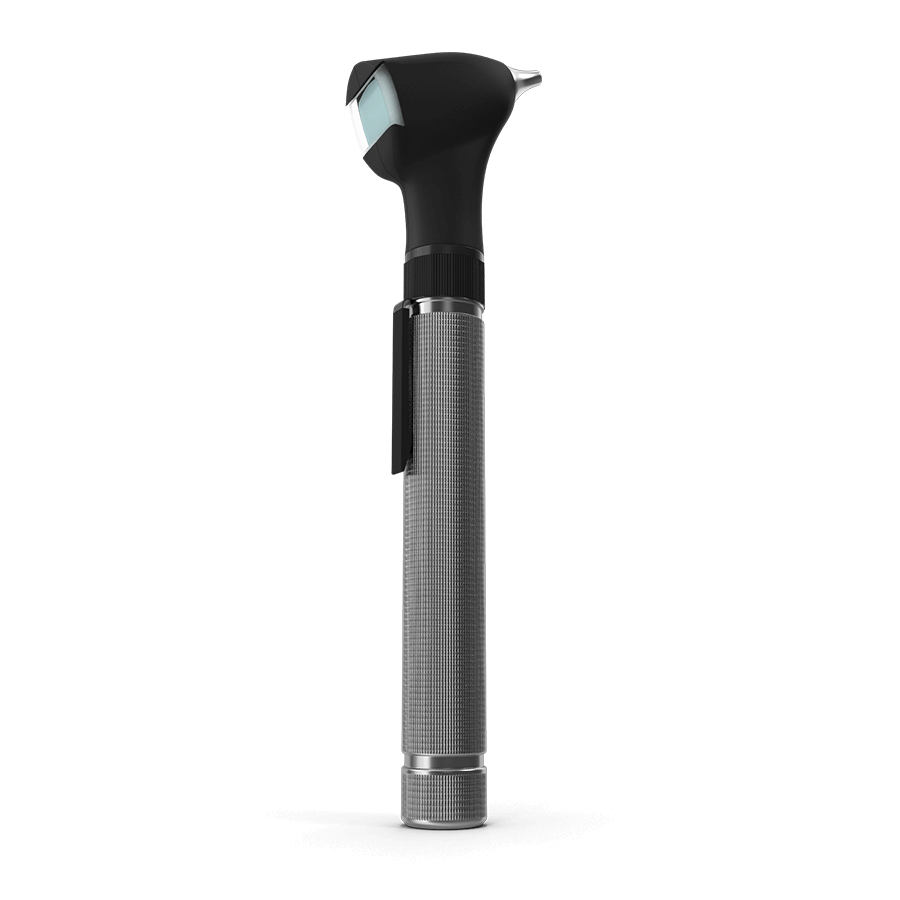
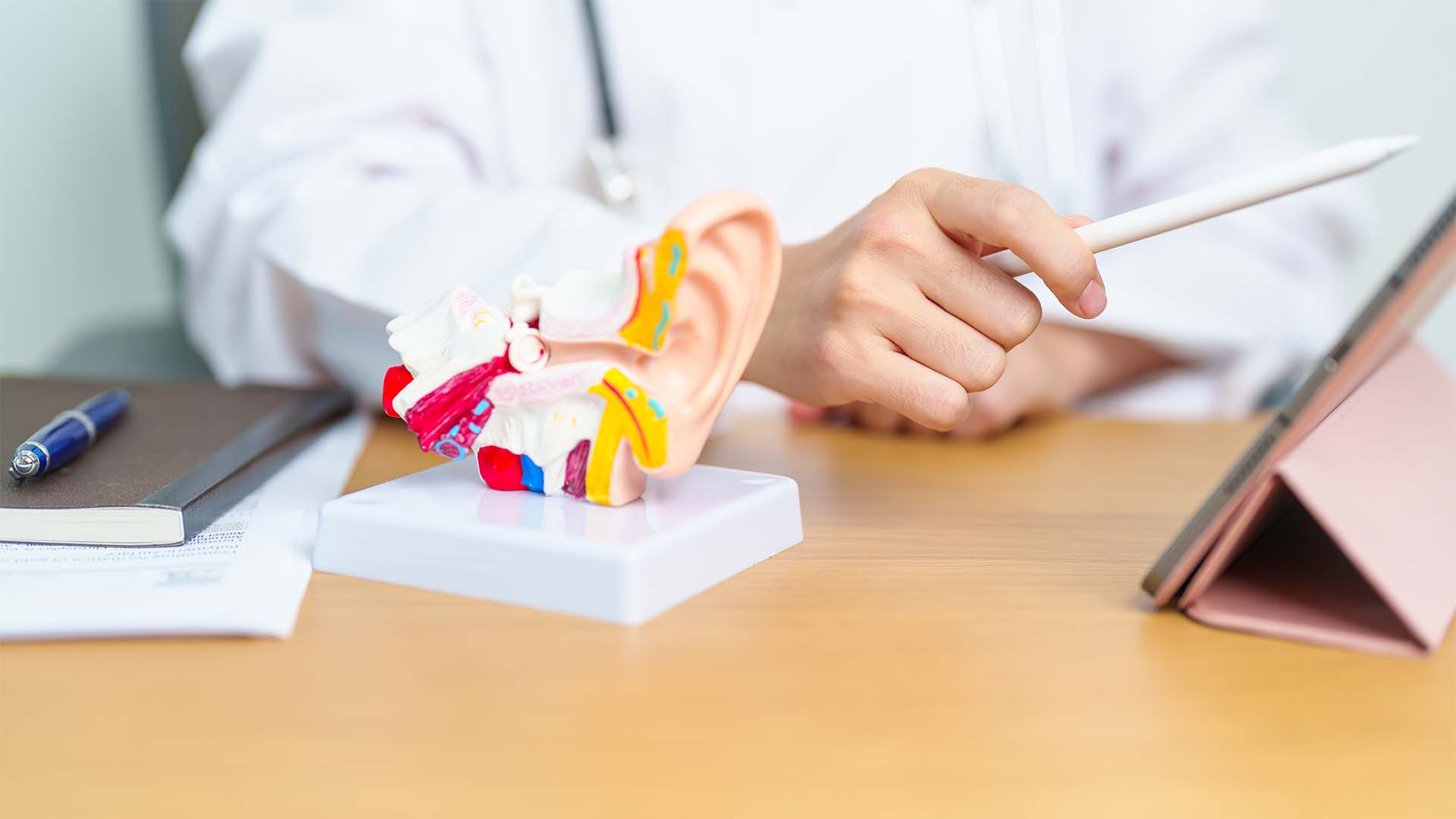
Otoscopy allows the clinician to inspect the ear canal and eardrum. At AudioCare, video otoscopy can provide a detailed view of these structures on screen.
This apparently simple step can change what happens next.
Significant wax may obstruct the ear canal. Inflammation, discharge or an abnormal-looking eardrum may require further investigation. In some cases, testing may still proceed; in others, treatment or ENT assessment may be more appropriate first.
The important point is that a reduced hearing threshold should not automatically be treated as permanent sensorineural hearing loss until the condition of the outer and middle ear has been considered.
NICE recommends excluding impacted wax and acute infection in adults presenting with hearing difficulties before proceeding along the usual audiological pathway.
Tympanometry may also be useful when middle-ear involvement is suspected. Unlike an audiogram, it does not measure the quietest sounds a person can hear. It measures how the eardrum and middle-ear system respond as pressure in the ear canal changes.
An abnormal tympanogram can therefore add information that hearing thresholds alone cannot provide.
The audiogram builds the foundation, but it needs to be read properly
Pure-tone audiometry remains one of the central parts of hearing assessment.
Air-conduction testing measures hearing thresholds across different frequencies using earphones or headphones. The result shows how softly sounds can be detected and reveals the degree and shape of any hearing loss.
Bone-conduction testing can then help determine whether the outer or middle ear is contributing to that loss. By stimulating the cochlea largely through vibration of the skull, it provides a second route for comparison.
If air-conduction thresholds are poorer than bone-conduction thresholds by a clinically meaningful amount, this may indicate a conductive component. If air and bone thresholds are similarly reduced, the pattern is more consistent with sensorineural hearing loss. Sometimes both components are present.
Masking may also be required when the ears differ sufficiently that the better ear could respond to a signal intended for the poorer ear. Without it, an apparently precise threshold may actually belong to the wrong cochlea.
None of these results should be interpreted as isolated numbers.
The pattern across frequencies, the symmetry between the ears, the history, otoscopic findings and any middle-ear measurements all need to make sense together.
Speech audiometry can add another layer. Pure tones tell us whether a sound is detectable. Speech testing asks how spoken material is recognised under controlled conditions.
That distinction becomes particularly important when someone says, “I can hear people talking, but I cannot always make out the words.”
Sometimes the standard audiogram does not explain the complaint
A quiet test room is deliberately controlled. Everyday listening is not.
Many people notice their greatest difficulty in restaurants, family gatherings, cars, meetings or other places where speech competes with background sound. Their pure-tone audiogram may demonstrate hearing loss, but it cannot fully predict how well they will understand speech in those environments.
Speech-in-Noise testing can be useful when that is the main complaint. Tests such as QuickSIN examine how speech recognition changes as competing noise becomes more challenging.
AudioCare can also use Audible Contrast Threshold testing when clinically appropriate. ACT does not ask the listener to repeat speech. Instead, it measures sensitivity to changes in complex sound patterns and can provide additional information about auditory contrast.
These tests are not automatically necessary for everyone, and neither replaces the audiogram. They answer different questions.
The same principle applies to other supplementary tests. A good assessment is not one in which every available test is performed. It is one in which the clinician chooses the measurements needed to explain the particular problem in front of them.
Sometimes the right next step is not a hearing aid
An audiological assessment should also identify findings that need medical attention.
Sudden hearing loss is an obvious example because timing can be clinically important. Rapidly worsening hearing, unexplained asymmetry between the ears, persistent unilateral symptoms, recurrent vertigo, ear pain or discharge may also justify further medical or ENT investigation depending on the overall presentation.
This does not mean that these symptoms necessarily indicate something serious. It means they should not simply be absorbed into a routine hearing-aid pathway without asking why they are present.
Conductive hearing loss provides another example. If the problem is related to wax, middle-ear fluid, infection or another treatable ear condition, managing that issue may alter the hearing thresholds themselves.
Even when permanent hearing loss is confirmed, amplification is not automatically prescribed on the basis of a number on the audiogram.
Current NICE guidance recommends hearing aids for adults whose hearing loss affects their ability to hear and communicate. In other words, the clinical relevance of the hearing loss matters alongside the measured thresholds.
There are also people for whom communication strategies, monitoring or further investigation form part of the initial plan.
The correct decision depends on what the assessment has established.
A recommendation should be the result of the assessment
By the time a hearing aid is discussed, several questions should already have answers.
What type of hearing loss is present? How severe is it, and at which frequencies? Are both ears affected in the same way? Does speech testing agree with the pure-tone results? Is middle-ear function normal? Does the test pattern explain the difficulties described in everyday life? Is there anything that requires medical assessment first?
Only then does a hearing-aid recommendation have proper clinical context.
At AudioCare, the process begins with the individual rather than the device: consultation, ear examination, appropriate audiological testing and interpretation of those findings together.
Sometimes that process confirms that hearing aids are a sensible next step. Sometimes it identifies a different priority.
Both are useful outcomes.
A hearing assessment has done its job when it explains enough of the problem to make the next decision an informed one.
The prescription comes afterwards.
References
- https://www.nice.org.uk/guidance/ng98
- https://www.nice.org.uk/guidance/ng98/resources/hearing-loss-in-adults-assessment-and-management-pdf-
- https://www.thebsa.org.uk/wp-content/uploads/2023/10/OD104-80-BSA-Practice-Guidance-Speech-in-Noise-FINAL.Feb-2019.pdf
- https://www.thebsa.org.uk/wp-content/uploads/2026/03/BSA-Recommended-Procedure-Tympanometry-Acoustic-Reflex-Thresholds-March-2026-minor-revision.pdf