


Table of Contents
Hearing loss is often imagined as an obvious event: one day everything is clear, the next it is not. In clinical practice, gradual hearing change rarely behaves like that. More often, it develops quietly over months or years. A person starts asking for the occasional repeat, then turns the television up, chooses quieter tables or avoids phone calls without consciously linking these habits to hearing.
Because the change is slow, there is no single moment that feels serious enough to act on. Daily life adjusts around the problem. By the time someone books a hearing assessment, they may have been compensating for far longer than they realised.
Understanding why this happens matters. Early hearing changes are easier to identify when people know what to look for, and a baseline assessment can separate normal variation from a measurable change that deserves monitoring or support.
A gradual change has no clear starting point
The auditory system is remarkably adaptable. When hearing reduces slowly, the change from one day to the next is usually too small to notice. The sound of a familiar room still feels normal because the new version has replaced the old one bit by bit.
This is common with age-related and noise-related hearing loss, both of which often affect higher frequencies first. A person may still hear voices, traffic and the television, so they do not feel that they are “losing their hearing”. What changes first is often detail.
That distinction explains why many people miss the problem. They are not living in silence. The difficulty appears in finer tasks: distinguishing similar words, following a softly spoken colleague or understanding conversation when several people speak at once.
The absence of a dramatic moment also makes delay feel reasonable. People blame the noisy restaurant, the actor who mumbles or the poor phone connection. Any one of those explanations may be true. It is the repeated pattern across different situations that matters.
Small adjustments can hide a larger pattern
People are good at solving everyday problems, and that can make hearing change easy to conceal. They sit closer to the speaker, watch faces more carefully, increase the television volume, ask a partner to make phone calls or choose quieter venues.
These behaviours can become automatic. Once a person has adapted their routine, they may stop noticing how much work is involved.
Context also fills in missing information. Familiar voices, predictable topics and visual cues allow the brain to reconstruct what the ears did not deliver cleanly.
This compensation is effective, but not effortless. Many people feel unusually tired after meetings, family meals or social events without realising that listening has become demanding. Others become less talkative in groups because following the discussion takes too much concentration.
These changes are often misread as personality. Someone may think they have simply become less sociable or less patient. In reality, they may be avoiding situations where communication has become unreliable.
Speech clarity often changes before volume
One of the most persistent misunderstandings about hearing loss is that everything should simply sound quieter. In many common forms of sensorineural hearing loss, speech becomes less distinct before it feels dramatically softer.
Vowels carry much of the volume in speech. Consonants carry much of the precision. Sounds such as “s”, “f”, “th”, “t” and “sh” are relatively soft and sit in the higher-frequency range, which is often where gradual hearing loss begins.
This creates the familiar complaint: “I can hear people talking, but I cannot always understand the words.” Turning the volume up may make the voice louder without fully restoring the missing distinctions between similar sounds.
Background noise exposes this problem early. In a quiet room, context and visual cues can compensate for missing detail. In a café, meeting or family gathering, competing voices mask the softer parts of speech.
Telephone conversations can also become difficult because there are no facial cues and the person cannot control how quickly the other speaker talks. Yet because the difficulty varies by setting, it may not initially feel like a consistent hearing problem.
Why other people often notice first
Family members and colleagues frequently recognise hearing changes before the person experiencing them. They notice repeated questions, missed names, unusual responses or a television volume that seems excessive.
This can create tension because the two sides are observing different things. The person with hearing loss hears enough to feel that communication is broadly working. The family member experiences the repeated repairs needed to keep conversations moving.
Comments such as “you are not listening” are rarely helpful. Hearing and attention are not the same thing. A person may be concentrating intensely and still miss a key word because the sound information reaching them is incomplete.
A better approach is to describe specific situations without blame. Noticing that group conversations have become harder, that names are often misheard or that phone calls require frequent repetition gives the person something concrete to consider.
It is also important not to assume every change is permanent hearing loss. Earwax, middle-ear pressure, infection and other treatable conditions can also reduce hearing. That uncertainty is another reason assessment is more useful than guesswork.
What a complete hearing assessment can reveal
A hearing assessment should do more than decide whether someone can hear a series of beeps. Pure-tone audiometry maps the softest sounds heard across different frequencies and shows whether the two ears behave similarly. Speech audiometry examines how clearly spoken words are recognised once they are audible.
For people who manage well in quiet but struggle in busy places, speech-in-noise testing can provide important additional information. It measures how much clearer speech needs to be than the surrounding noise for the person to understand it reliably.
Audiocare’s audiology services include pure-tone and speech audiometry, Speech-in-Noise testing and the Audible Contrast Threshold assessment. These measures connect clinical results with the situations patients actually find difficult, rather than relying on the audiogram alone.
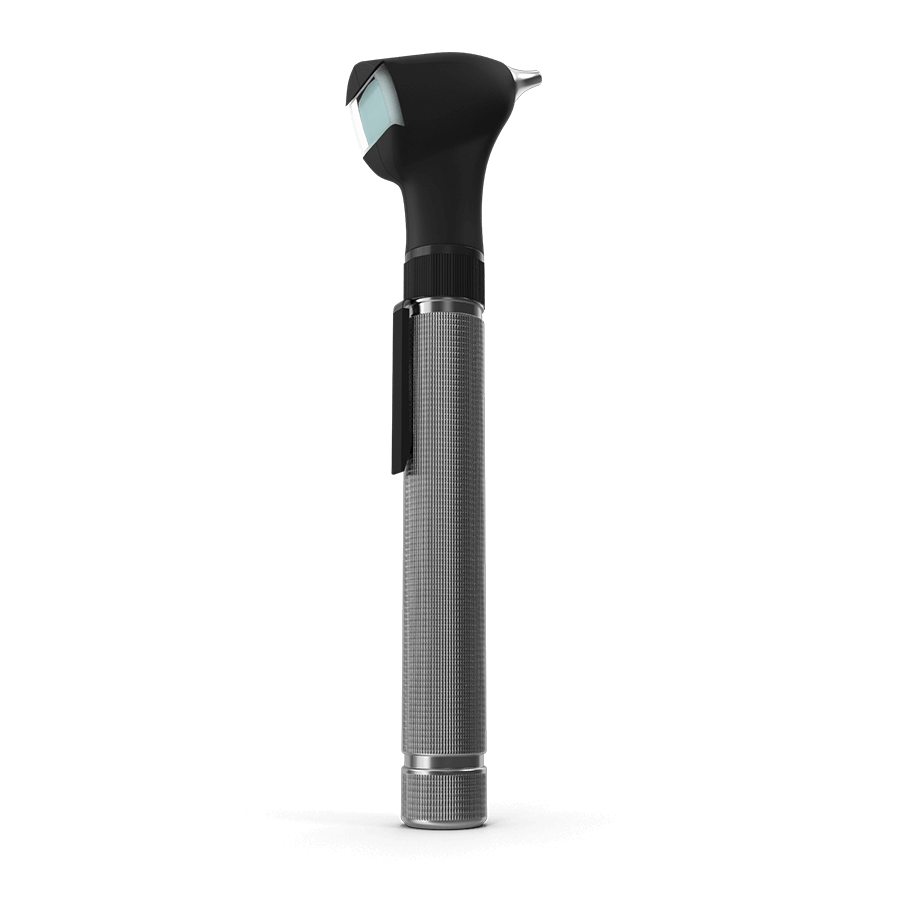
The examination may also include video otoscopy to look for wax or ear-canal problems, and tympanometry when middle-ear pressure or fluid is suspected. High-frequency audiometry can be useful in selected cases where early changes sit above the range assessed in a standard test.
The purpose is not to push everyone towards the same solution. Some people need reassurance and monitoring. Others have a treatable obstruction or middle-ear issue. Some benefit from communication strategies, while others may be candidates for hearing aids tailored to their hearing profile and daily environments.
If hearing aids are recommended, fitting and follow-up matter. Audiocare works in partnership with Signia and combines device selection with adjustment, verification and ongoing support. The aim is not simply to make sound louder, but to improve usable clarity where communication matters.
When not to wait for a routine check
This article focuses on slow, easily missed changes. A sudden loss of hearing is different and should not be treated as a routine appointment. Hearing that drops suddenly over hours or a few days, particularly in one ear, requires prompt medical assessment.
Rapid worsening, persistent one-sided symptoms, ear discharge, significant pain, strong dizziness or a marked new asymmetry also deserve timely evaluation. These patterns may need ENT assessment rather than simple monitoring.
For gradual changes, the useful question is not whether hearing is “bad enough”. It is whether communication has changed. If conversations require more effort, television volume keeps rising or noisy rooms have become harder to manage, that is enough reason to establish a baseline.
A baseline makes gradual change visible
The main reason hearing changes go unnoticed is simple: people adapt faster than they measure. Small adjustments keep daily life moving, but they also hide the pattern.
A baseline hearing assessment creates an objective reference. Future results can be compared with it, making small changes easier to identify and explain. It also gives the person a clearer understanding of which situations are difficult and why.
Not every assessment leads to treatment. Sometimes the most useful outcome is reassurance, practical advice and a plan to review hearing at an appropriate interval. When support is needed, identifying the problem earlier allows the solution to be matched more carefully to the person’s communication needs and lifestyle.
Hearing should not be judged only by whether sound is present. The more useful measure is whether speech remains clear, conversations remain manageable and everyday communication still feels dependable.