

Table of Contents
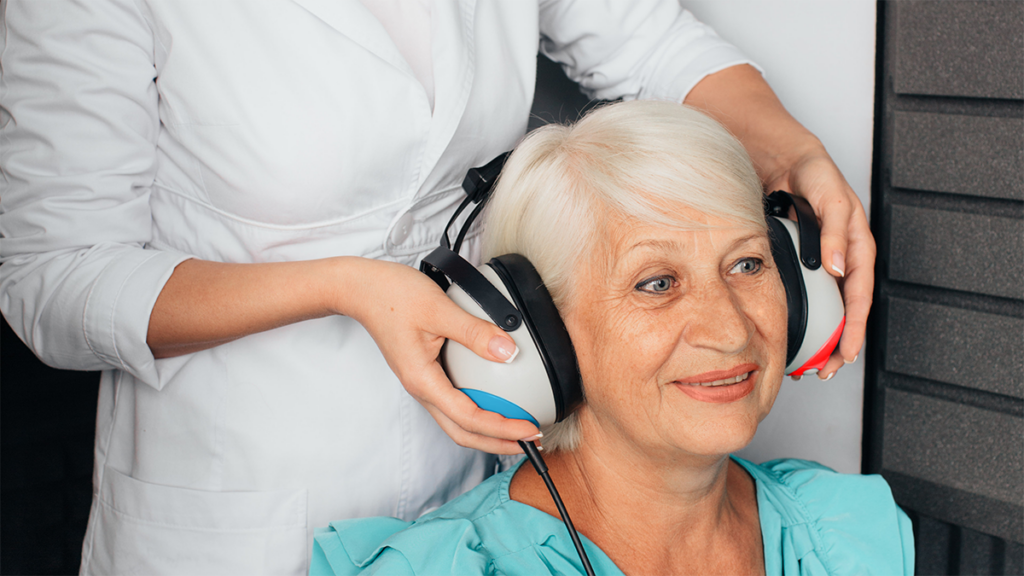
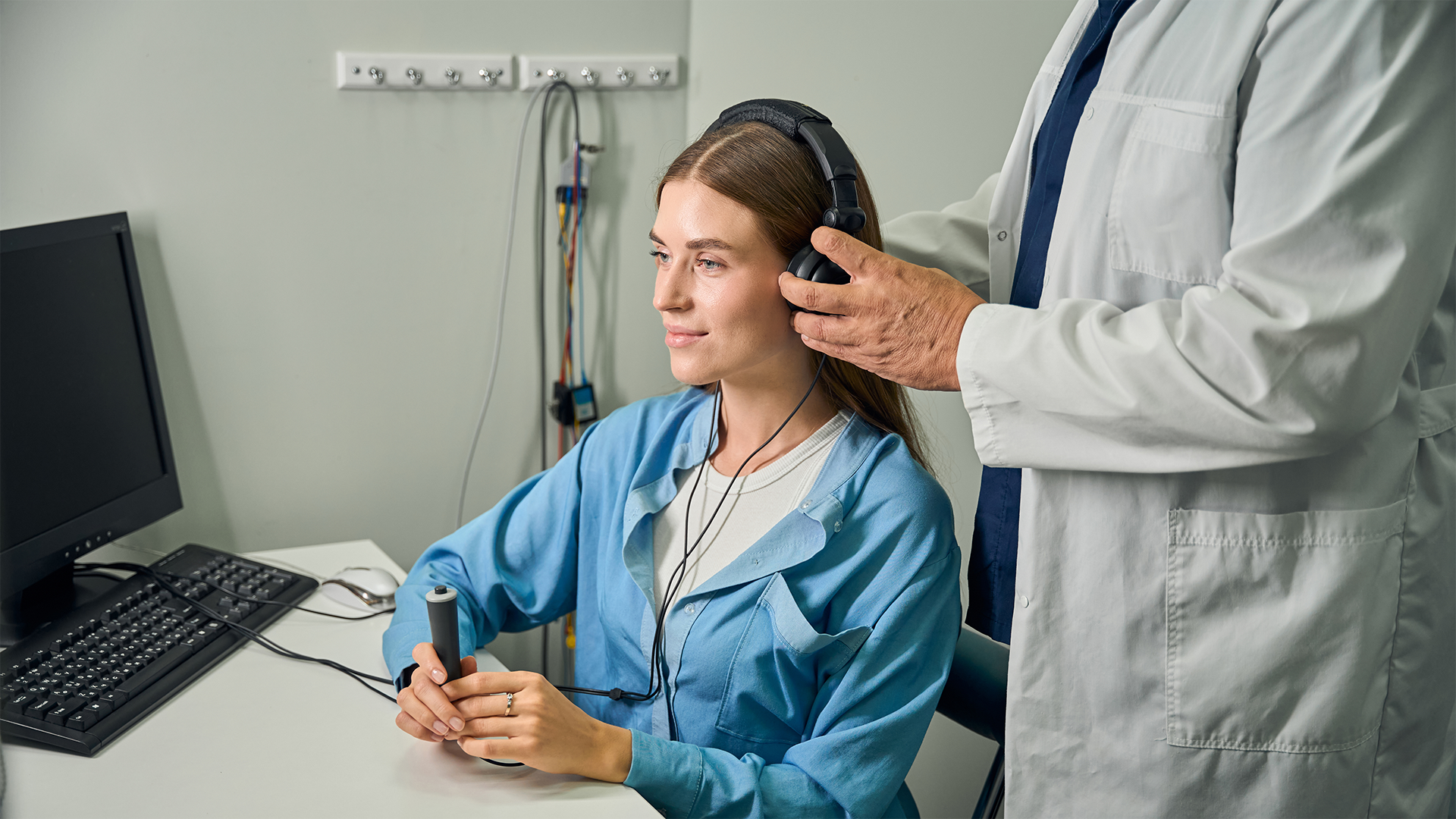
A hearing assessment often appears to begin when the headphones go on.
Clinically, it should begin much earlier.
Before the first tone is presented, an audiologist needs to understand what brought the person into the room. When did the change begin? Did it develop gradually or suddenly? Is one ear different from the other? Is conversation difficult everywhere, or mainly in restaurants, meetings or the car?
These questions are not polite preliminaries before the “real” test.
They are part of the assessment.
Objective measurements remain essential. An audiogram can establish hearing thresholds with a precision that conversation alone cannot provide. Speech testing, tympanometry and other procedures add information that symptoms cannot reliably predict.
But measurements do not interpret themselves.
Two people can produce similar audiograms and describe very different communication problems. Conversely, someone may report substantial difficulty despite relatively reassuring conventional thresholds.
From an audiological perspective, neither side should be given priority over the other. The most useful assessment happens when the measurable hearing profile and the person’s lived experience are examined together.
How the problem began can change what we look for
One of the first questions should be deceptively simple: when did you notice the change?
The answer immediately begins to shape the clinical picture.
Hearing that has gradually become less clear over several years presents differently from an ear that changed noticeably within a few days. A stable difficulty affecting both ears is different from fluctuating hearing on one side.
The speed and pattern of change can influence both the tests selected and the urgency of referral.
Sudden or rapidly progressive hearing loss, for example, cannot simply be placed into the same routine pathway as long-standing gradual hearing difficulty. A history of unilateral change, recurrent fluctuation, persistent tinnitus in one ear, dizziness or other associated symptoms may also justify closer investigation.
A previous audiogram becomes particularly valuable in these situations.
One test tells us how someone hears today. Two tests separated by time can tell us whether hearing has changed, at which frequencies and in which ear.
The same principle applies when the person says hearing has “always been worse” on one side. Knowing whether that difference is lifelong, recent or progressive changes the significance of the result.
Memory is not a measurement, of course. People do not always notice gradual hearing changes accurately, and the point at which a problem becomes noticeable is not necessarily the point at which it began.
That is precisely why the history and the audiogram complement each other.
The patient tells us the timeline they experienced. The measurements tell us what can be demonstrated now.
Neither provides the complete answer alone.
Your work, hobbies and past exposure can alter the interpretation
Noise history is another part of the consultation that can appear routine until it becomes clinically relevant.
Occupational exposure may include machinery, construction, aviation, agriculture, industrial environments or prolonged work around amplified sound.
Leisure exposure can be equally important. Musicians, motorcyclists, shooters, frequent concert-goers and people who spend substantial periods using personal listening devices may have very different acoustic histories despite doing similar jobs.
The useful question is not simply, “Have you been exposed to loud noise?”
It is what kind, how often, for how long and with what hearing protection.
Exposure history does not allow an audiologist to look at an audiogram and prove exactly where a hearing loss came from. Patterns associated with noise are not uniquely diagnostic, and ageing, genetics and other influences may coexist.
But the history changes how findings are interpreted and what preventive advice is appropriate.
The same applies to ototoxic exposure.
Some medicines are known to carry a risk of damaging hearing under particular circumstances. A medication history can therefore be clinically relevant, especially when hearing has changed during or after treatment with a drug recognised as potentially ototoxic.
That does not mean patients should stop or alter medication because of a hearing concern. Treatment decisions belong with the prescribing medical team.
The audiologist’s role is to identify relevant history, measure hearing appropriately and, when necessary, communicate or refer so that the information can be considered within the wider medical picture.
In selected situations, that history may also influence whether extended high-frequency audiometry or serial monitoring is useful.
Again, the story determines which measurement becomes meaningful.
Where you struggle may be as informative as how much hearing loss you have
A person rarely arrives saying, “I have a 35 dB threshold at 4 kHz.”
They say, “I cannot follow my grandchildren at dinner.”
Or: “Meetings have become exhausting.”
Or: “I hear my wife perfectly at home, but in a restaurant I lose half the conversation.”
Those descriptions reveal something an audiogram cannot reproduce on its own: the listening task that actually matters.
Pure-tone audiometry measures the quietest tones a person can detect at different frequencies. It is indispensable for establishing hearing sensitivity, but daily communication does not happen in a silent test environment.
Speech has to compete with other voices, traffic, television, ventilation, music and reverberation. Distance changes the strength of the speaker’s voice. Several people may speak at once. Accents and unfamiliar voices may add another layer of difficulty.
That is why a clinically useful case history should ask where communication breaks down.
If someone hears well one-to-one but struggles dramatically in background noise, Speech-in-Noise testing may answer a more relevant question than simply repeating pure-tone audiometry.
If speech itself seems unclear even when comfortably loud, speech audiometry can provide information about recognition that hearing thresholds alone do not supply.
At AudioCare, tests such as pure-tone and speech audiometry, QuickSIN and Audible Contrast Threshold testing can therefore be selected according to the difficulty being investigated rather than applied mechanically to every complaint.
The goal is not to perform the largest possible test battery.
It is to choose measurements that help explain the actual problem.
Ear and medical history can change the pathway before the audiogram does
Not every hearing complaint begins in the cochlea.
A history of recurrent ear infections, previous ear surgery, discharge, pain, pressure, trauma or persistent problems with Eustachian tube function may point towards outer- or middle-ear involvement.
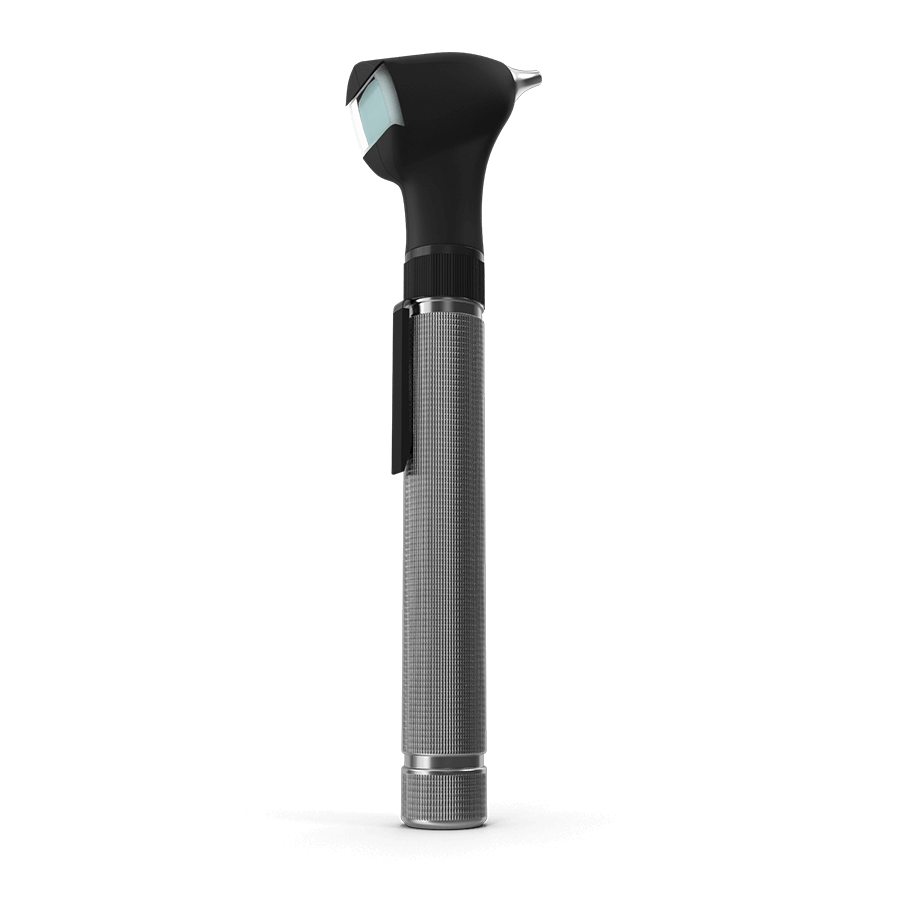
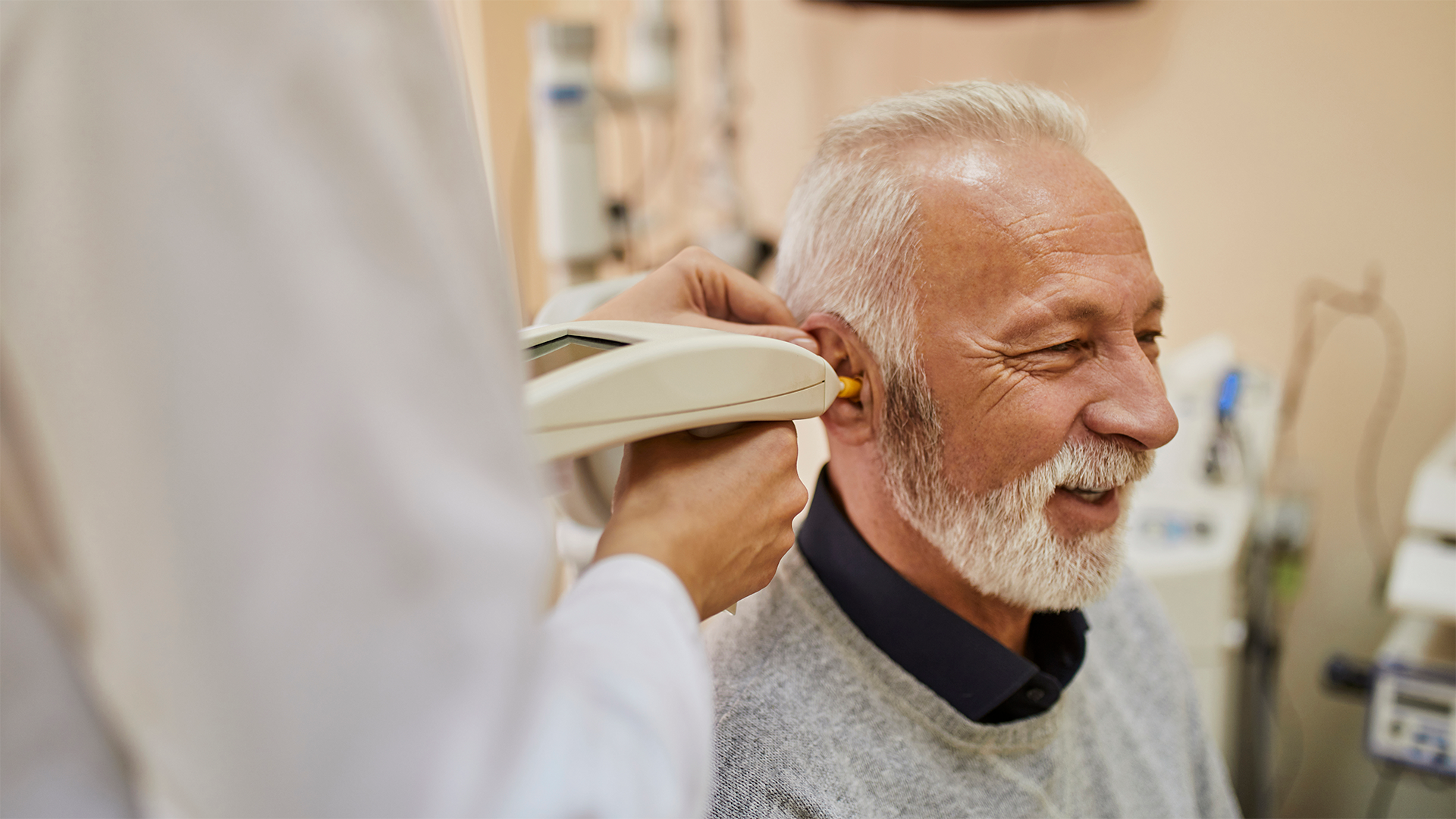
That is why otoscopy is not merely an administrative step before audiometry.
Seeing impacted earwax, inflammation or an abnormal eardrum immediately changes the context in which the rest of the assessment is interpreted.
Tympanometry can add objective information about middle-ear pressure and the mobility of the eardrum when symptoms or examination findings justify it.
Dizziness, imbalance and tinnitus also matter.
They do not automatically identify the cause of a hearing problem, but they can alter the differential diagnosis and determine whether ENT or another medical assessment is appropriate.
General medical history can be relevant too. Previous head injury, neurological disease, family history of hearing loss and other conditions may influence what the clinician needs to consider.
This is where a good case history becomes more than a checklist.
A list of twenty questions asked mechanically is less useful than understanding which answer changes the next clinical decision.
If someone reports sudden one-sided hearing loss, the priority is different from that of someone describing a slow bilateral decline over ten years.
If the difficulty is accompanied by ear discharge, pain or neurological symptoms, routine hearing rehabilitation may no longer be the immediate next step.
Good assessment involves knowing when not to continue down the obvious pathway.
When the test and the experience do not seem to agree
One of the most important moments in audiology occurs when a patient says:
“But that result does not explain what I experience.”
Sometimes they are right.
A pure-tone audiogram may show relatively mild hearing loss while the person reports substantial difficulty in group conversation. Another person may have more significant threshold loss yet function surprisingly well in familiar environments.
This is not evidence that either the test or the patient is unreliable.
They are describing different dimensions of hearing.
NICE guidance explicitly recognises that communication difficulties cannot be judged from pure-tone thresholds alone. Hearing disability is shaped by listening environment, communication demands and the individual circumstances of the person.
Speech-in-noise ability is a good example.
Two people with similar conventional audiograms can require different signal-to-noise ratios to understand conversation successfully. If the principal complaint involves noisy settings, measuring that ability can help reconcile the apparent gap between the audiogram and daily experience.
Language also matters.
Speech test results must be interpreted with awareness of the language used, familiarity with the material and the person’s linguistic background. This is especially relevant in the Algarve, where many patients communicate across more than one language.
A lower score on a speech test cannot automatically be attributed to auditory function if the test language itself changes the difficulty.
The clinical task is therefore not to force the patient’s experience to fit the graph.
It is to understand where they agree, where they differ and what additional information is needed.
The assessment should end with an explanation, not just a result
A technically accurate audiogram is useful.
A technically accurate audiogram that has been interpreted in the context of the individual is considerably more useful.
By the end of an assessment, we should be able to explain not only whether hearing loss is present, but how confident we are that the findings account for the problems the person described.
Sometimes the answer is straightforward. The history, audiogram and speech results align clearly.
Sometimes further testing is appropriate.
A complaint centred on background noise may justify Speech-in-Noise assessment. Middle-ear symptoms may make tympanometry relevant. Particular exposure or monitoring histories may justify high-frequency testing. Asymmetry, sudden change or associated symptoms may require ENT or medical referral.
And occasionally, audiological testing does not explain the full complaint.
That result is still valuable. Knowing that peripheral hearing does not account for everything prevents inappropriate treatment and helps determine whether investigation should move elsewhere.
At AudioCare, this is why an initial consultation should not be seen merely as the conversation before the hearing test.
It determines what the hearing test needs to answer.
The measurements provide objective evidence. The history tells us which evidence matters.
Neither should be used to replace the other.
A person is not an audiogram, but neither can hearing care be based on symptoms alone.
The strongest clinical assessment sits between those two extremes: careful listening to the person, careful measurement of the auditory system and an interpretation that makes sense of both.
Because the question is never only, “What does the test show?”
It is also, “Does this explain how this person hears?”
References
- https://www.nice.org.uk/guidance/ng98
- https://www.nice.org.uk/guidance/qs185
- https://www.thebsa.org.uk/wp-content/uploads/2023/10/OD104-52-Practice-Guidance-Common-Principles-of-Rehabilitation-for-Adults-in-Audiology-Services-2016.pdf
- https://www.asha.org/practice-portal/clinical-topics/hearing-loss/
- https://www.asha.org/practice-portal/professional-issues/adult-hearing-screening/
- https://audiocare.pt/pure-tone-speech-audiometry/
- https://audiocare.pt/speech-in-noise-act-test/
- https://audiocare.pt/