

Table of Contents
Modern hearing aids can do impressive things, but there is still one question that matters more than any brochure claim: is the sound reaching your ear in the way it is meant to? That is where Real-Ear Measurements, often shortened to REM, become so valuable. They are not an “extra” for difficult cases or a technical luxury for audiologists who enjoy gadgets. They are one of the clearest ways to verify that a hearing aid fitting matches your hearing loss, your ear shape and your comfort. In plain terms, REM helps replace guesswork with evidence. If you wear hearing aids, especially for the first time, that matters more than many people realise.
What Real-Ear Measurements actually are
Real-Ear Measurements are a way of checking hearing aid output inside your own ear canal while you are wearing the device. A very fine probe tube is placed gently in the ear canal, near the eardrum but not touching it. The hearing aid is then put in place and sound is presented through a speaker in front of you. The probe microphone measures what is truly reaching the ear. That matters because no two ears are acoustically identical. Ear canals differ in shape, length, volume and resonance. A setting that looks correct on a computer screen may not produce the same result once the hearing aid is sitting in a real ear. REM shows what is happening in real life rather than assuming the fitting is correct because software says it should be.
This is why REM is often called probe microphone verification. The emphasis is on verification. It checks whether the hearing aid is meeting the prescription targets derived from your hearing test, and it gives the audiologist a reliable way to adjust settings if it is not. In other words, it answers a simple but important question: is this fitting actually doing what it should for this person?
Why software alone is not enough
Hearing aids are programmed using prescription formulae that estimate how much amplification is needed at different frequencies. That is the right starting point, but it remains an estimate until it is checked. Manufacturer first-fit settings are designed to be efficient and broadly suitable, yet they are not the same as individual verification. If a fitting is left at first fit without real-ear verification, the result may be too soft in one area, too strong in another, or simply inconsistent with what your hearing loss requires.
That has practical consequences. Speech may still sound dull even when the volume feels high enough. Soft speech might remain difficult to catch. Loudness may become tiring before clarity improves. Some people then assume hearing aids “do not work for them”, when the real issue is that the fitting has not been properly verified. REM reduces that risk. It improves the odds that the hearing aid is delivering enough sound where it is needed, without over-amplifying what would become uncomfortable or unnatural.
How REM improves comfort and clarity
The clearest benefit of REM is precision. If high-frequency speech sounds such as s, f, sh or t are still under-amplified, the audiologist can see this and correct it. If the fitting is too strong in the low frequencies and making speech sound boomy or the wearer’s own voice feel unnatural, that can be refined too. Instead of guessing based only on preference, the fitting is guided by both measurement and patient feedback.
This usually leads to two things people care about most. The first is clearer speech. Conversations become easier to follow because important consonant information is more available. The second is better comfort. A fitting that is properly balanced is less likely to feel sharp, hollow, muffled or tiring. That matters in daily life because hearing aids are not worn in test booths. They are worn in kitchens, cafés, work meetings, family gatherings and cars. A verified fitting gives a stronger foundation for all those moments.
REM is also helpful when the hearing loss is more complex. If one ear differs from the other, if the ear canal is unusually narrow or large, if open fittings are used, or if the wearer has very specific speech-in-noise complaints, verification becomes even more valuable. It allows the fitting to reflect the acoustic reality of that individual ear instead of relying on assumptions.
What happens during a REM appointment
For many people, the idea sounds more technical than the experience actually is. A REM appointment is usually calm and straightforward. After your hearing test and hearing aid programming, the audiologist places a fine soft probe tube in the ear canal. This is done carefully and should not be painful. The hearing aid is then inserted over or around the probe tube, depending on the style of device. You sit facing a speaker while test sounds are presented. The equipment measures the amplified sound in the ear canal and compares it with your prescription targets.
The audiologist then adjusts the hearing aids so the measured output moves closer to those targets. This may be repeated for soft, medium and louder speech-like inputs. Some clinics also verify how certain features behave, such as directionality or noise management, where appropriate. Once the measurements are complete, your own impression still matters. If a sound is accurate on the graph but clearly uncomfortable to you, the fitting must take that into account. REM is not there to override the person. It is there to give the fitting a strong evidence-based starting point, which is then refined with your real-life feedback.
At Audiocare, this type of verification is particularly relevant when fitting Signia devices, because modern digital platforms offer fine control across frequency regions and listening levels. That flexibility is useful only if it is being used accurately. REM helps make sure it is.
Who benefits most from REM
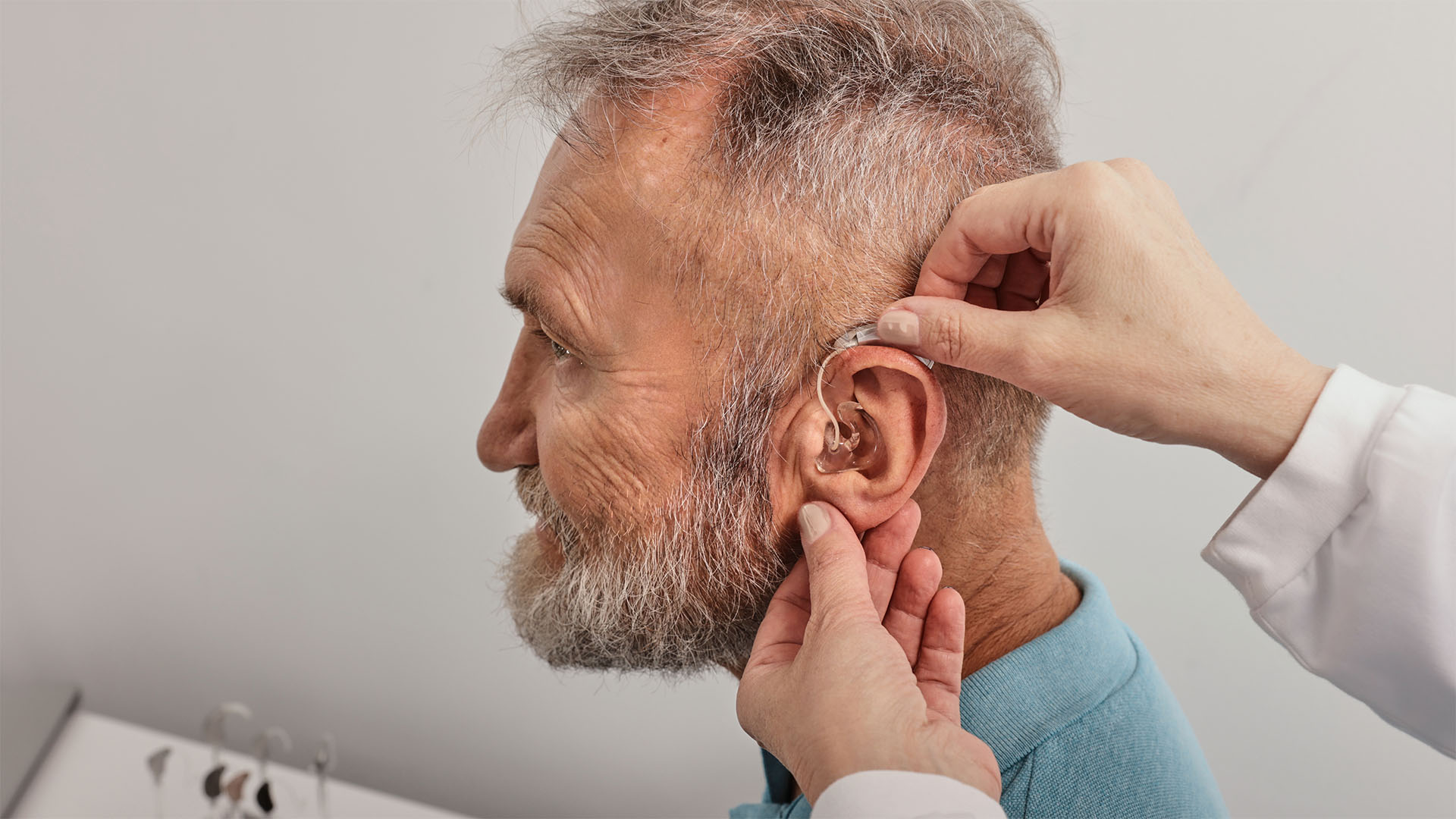
The short answer is simple: almost anyone being fitted with hearing aids can benefit from REM. It is especially useful for first-time wearers, because it reduces the chance of starting with a poor fit and losing confidence too early. It also matters for experienced wearers who are changing to a new device, a new acoustic coupling, or a new prescription.
People with hearing loss in both ears often benefit because the fitting can be balanced more precisely across the two sides. People with more unusual ear canal acoustics, asymmetrical hearing, narrow or surgically altered canals, or open domes can benefit even more because ear canal acoustics are less predictable in those cases. If someone has previously tried hearing aids and felt underwhelmed, REM can also be part of understanding why. Sometimes the device itself is not the problem. The fitting simply was not verified closely enough.
It is also valuable for people who want confidence that the hearing aid is performing as intended before judging success or failure. That confidence matters. It changes the conversation from “I hope this is right” to “we have measured what it is doing, and we can improve it if needed”.
What REM does not do
It is helpful to be clear about limits too. REM does not guarantee that every restaurant will suddenly feel easy. It does not erase all background noise. It does not replace the need for follow-up or communication strategies. Hearing aids still need an adaptation period, and your brain still needs time to relearn sound.
What REM does is reduce unnecessary uncertainty. It helps make sure the fitting begins from a measured, verified position rather than an approximate one. That gives you a better chance of adapting successfully and a better basis for any later fine-tuning. If speech still feels difficult after a verified fitting, the clinician knows more confidently that the next step is not basic amplification adjustment alone. It may involve communication strategy coaching, accessory options, earwax review, or more targeted troubleshooting.
Why verification is worth asking for
A well-fitted hearing aid should never feel like a lucky guess. If you are investing time, trust and energy in hearing care, verification is worth asking for. The most successful fittings are usually not the ones with the most marketing, but the ones that are measured carefully, adjusted thoughtfully and reviewed in the context of real life. REM supports exactly that process.
For people who want clearer speech, less listening effort and more confidence in what their hearing aids are actually doing, Real-Ear Measurements are one of the strongest tools available. They make the fitting more individual, more transparent and more accurate. In a field where comfort and clarity depend on tiny details, that is not a small benefit. It is the difference between hoping and knowing.
References
- https://www.nice.org.uk/guidance/ng98
- https://www.thebsa.org.uk/wp-content/uploads/2023/10/REMS-2018.pdf
- https://apps.asha.org/EvidenceMaps/Articles/ArticleSummary/9a7acb2a-5874-4415-bae5-069a9d7f733f
- https://www.signia-pro.com/en/business-support/unity-4/real-ear-measurement/
- https://www.signia-pro.com/en-gb/local/en-gb/uk-unity/